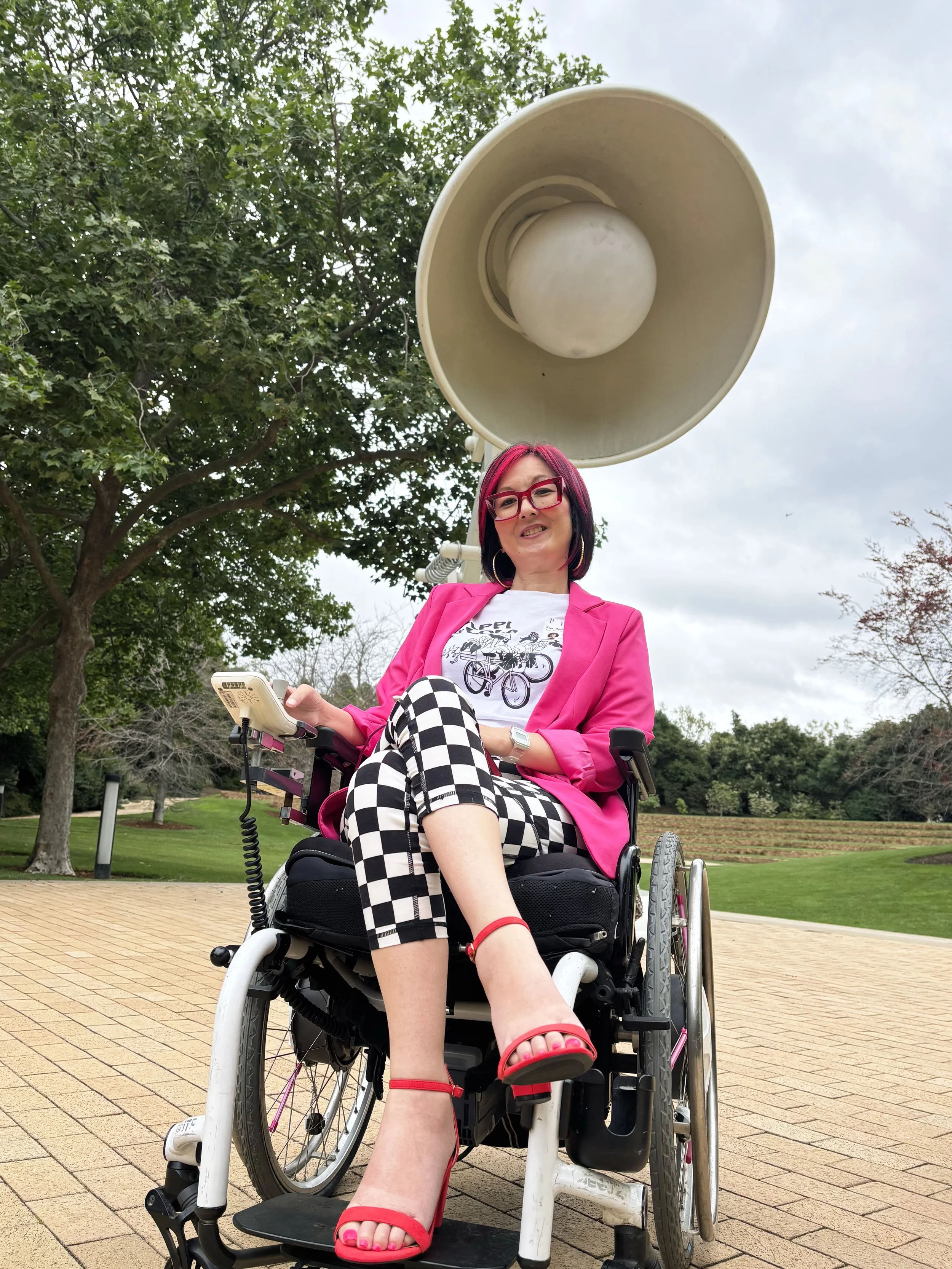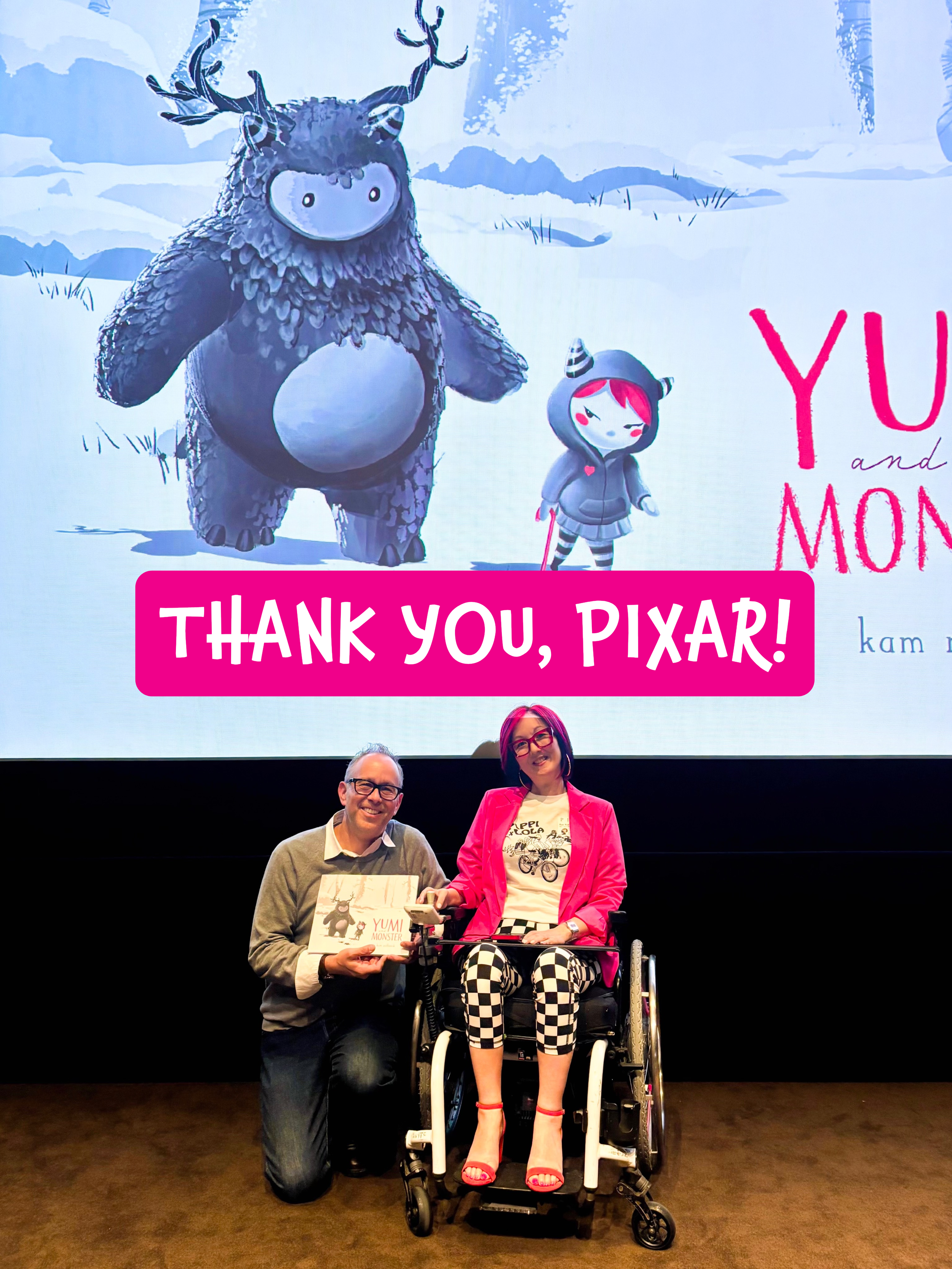
Thank you, Pixar!! The opportunity to share my personal story through my debut picture book, as the author-illustrator of Yumi and Monster, at Pixar was an incredible core memory experience. The best birthday gift I could have received.
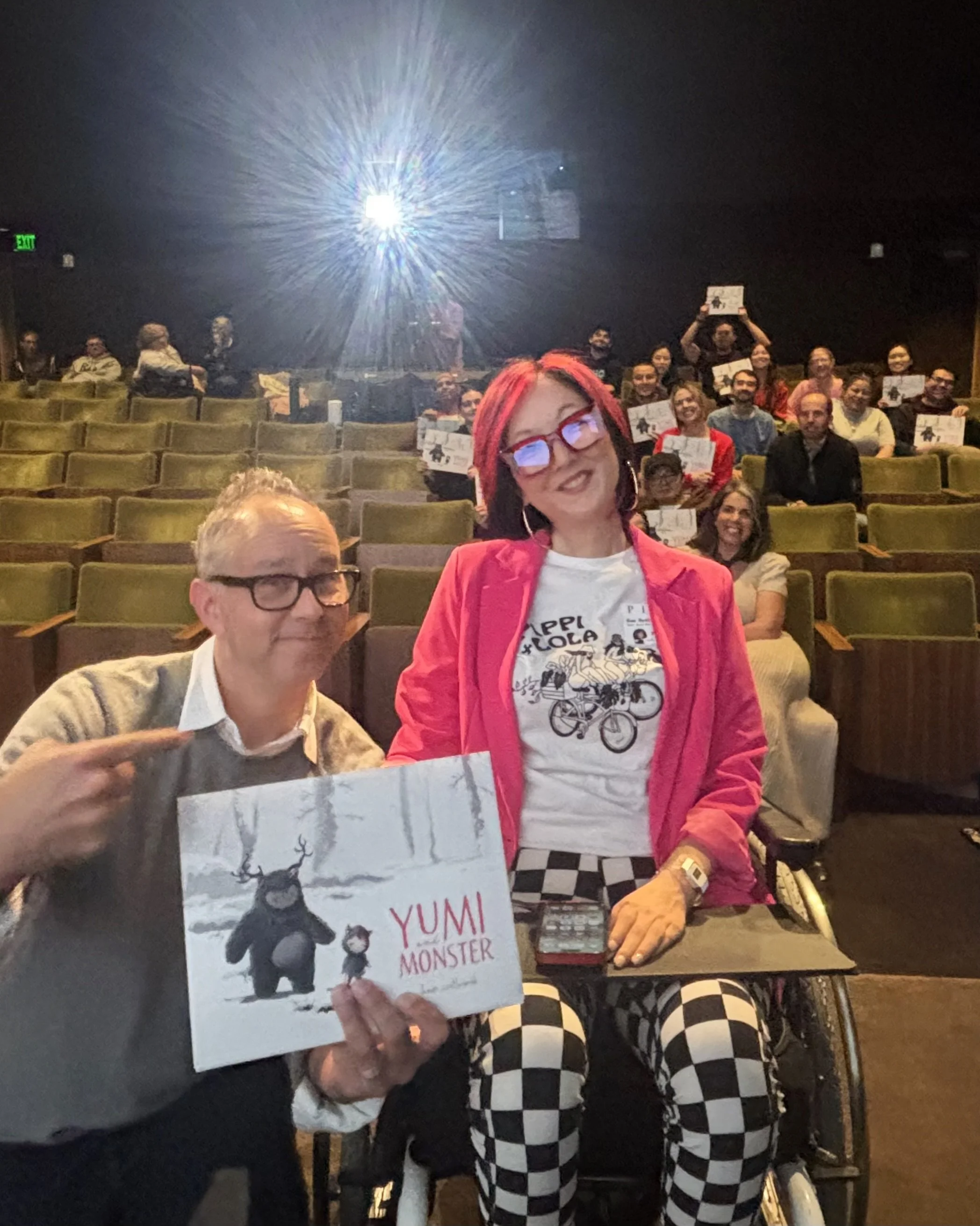
No doubt prior to my presentation, I was full of nerves. I’m speaking at Pixar as a self-taught illustrator and writer, so feeling like an impostor can come easily. Despite being a public advocate and speaking for 20 years, Jason laughs because as the only one who sees me prior to every presentation, I’m full of anxiety, coining that I am held together by duct tape prior to every public engagement. Fortunately, I’m told it’s hard to identify my nerves, probably because my sense of passion and curiosity luckily overrides any shy nerves or discomfort. It also helped that the Pixability team and Jonas created a comfortable environment to openly share, laugh, and even cry.
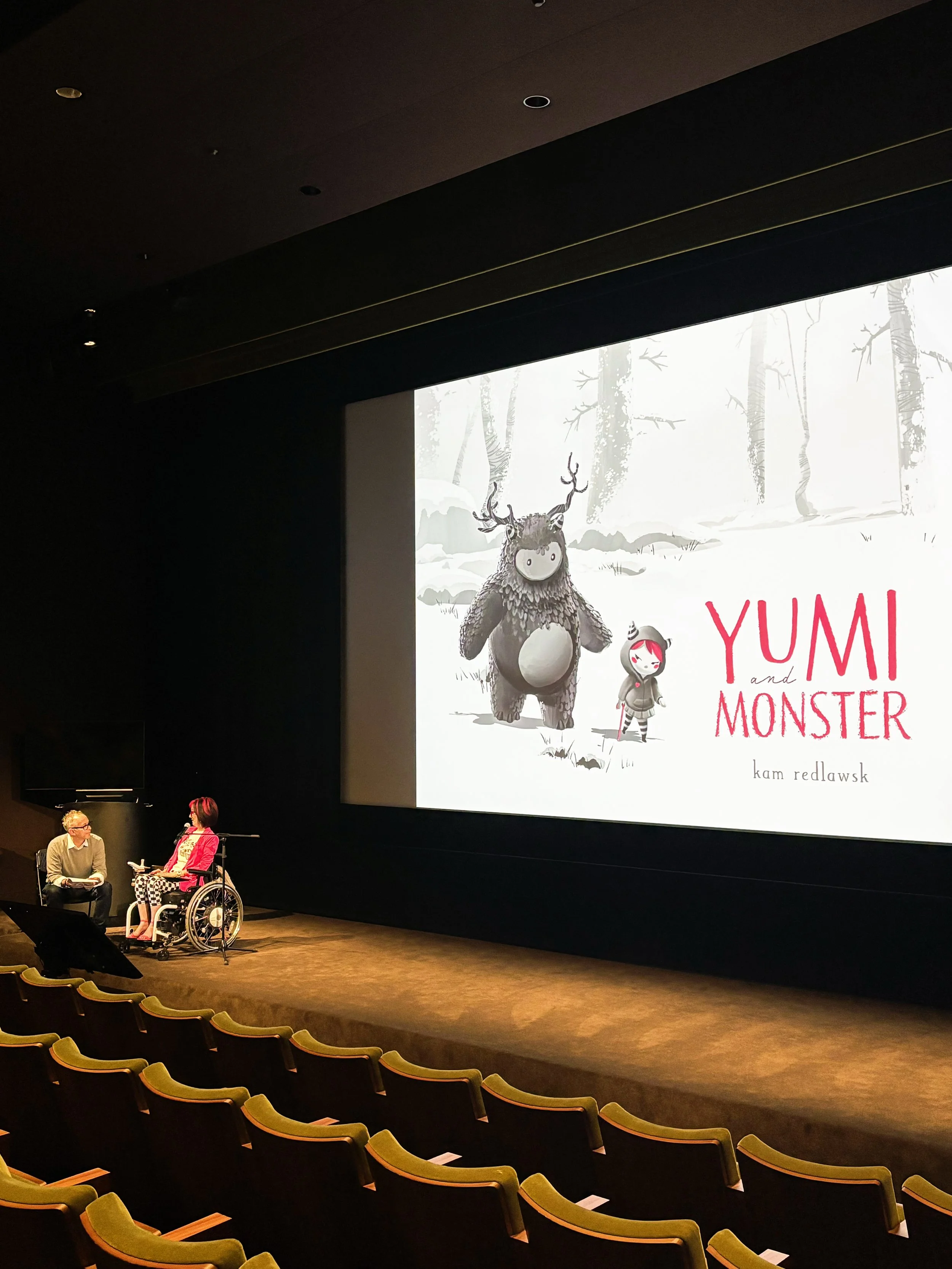
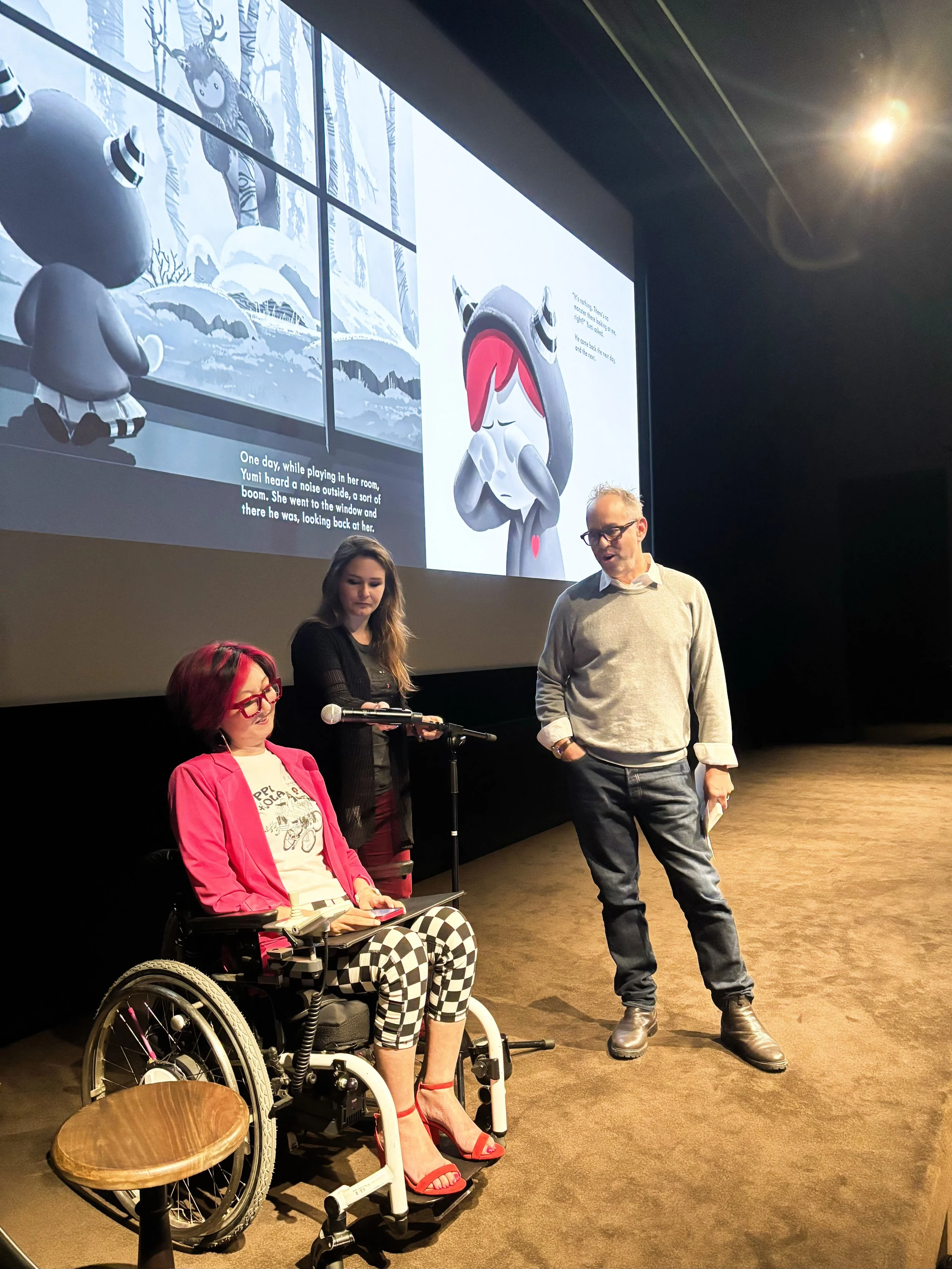
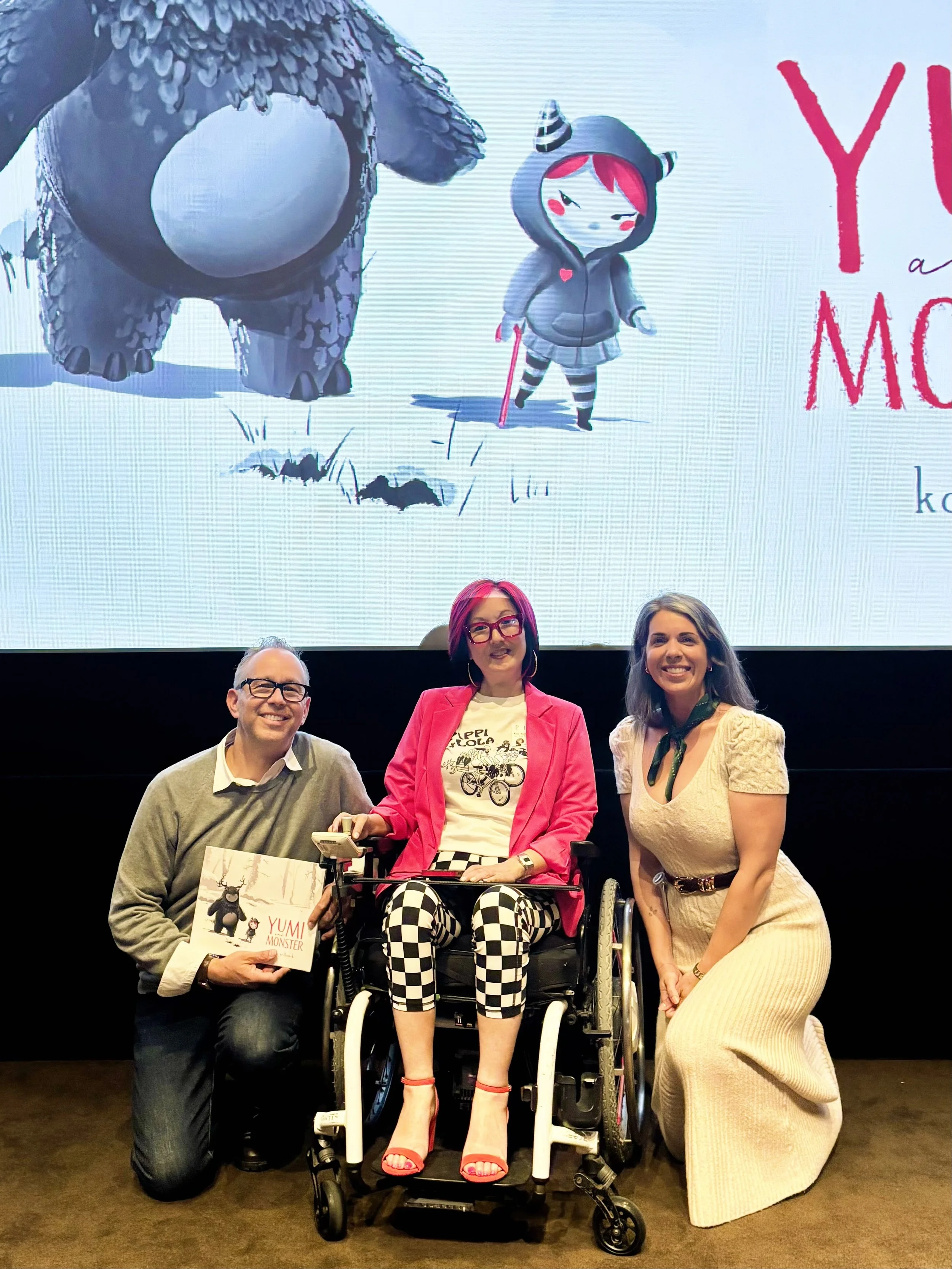
I was fortunate enough to be interviewed by Jonas Rivera, who was the very first intern at Pixar (I learned later). Today, Jonas is the Executive VP of all Pixar Film Production. Honestly, I didn’t know a lot about Jonas, and though I’m typically very much the researcher type, I decided not to look into who he was so I wouldn’t be nervous. Any floating nerves immediately dissipated upon meeting Jonas, who was so accessible, kind, and gracious with his time. Despite having an incredibly busy schedule, and adding my little event to his itinerary just weeks prior, he spent almost two hours with me, prepping and meeting 30 minutes before the hour-long presentation, and afterwards for a book signing.
Jason, my husband, said it was my best Yumi and Monster interview yet, and it’s in part because Jonas, as a storyteller and someone who is behind the film production process, knew the questions to ask, creating an engaging and open dialogue. We had immediate conversation chemistry and could have easily talked for another hour.
Meeting prior to the presentation, it was obvious Jonas had a lot of passion for an array of subjects as we shared about life, storytelling, animation, and traveling. It was also apparent that Jonas had done his homework and knew a bit about me, including reading the 2017 LA Times Sunday paper cover feature where I shared about living with a progressive muscular dystrophy, and my love of exploring and deserts like Death Valley. Even though I love the desert and Death Valley, I get that it isn’t for everybody. It’s hot, dry, not seemingly exciting with nothing around for miles, so finding a fellow desert enthusiast is rare. Turns out Jonas loves Death Valley, so the irony that he would ask me a question about this place only two days after me revisiting Death Valley on our road trip up to San Francisco was not lost on me.
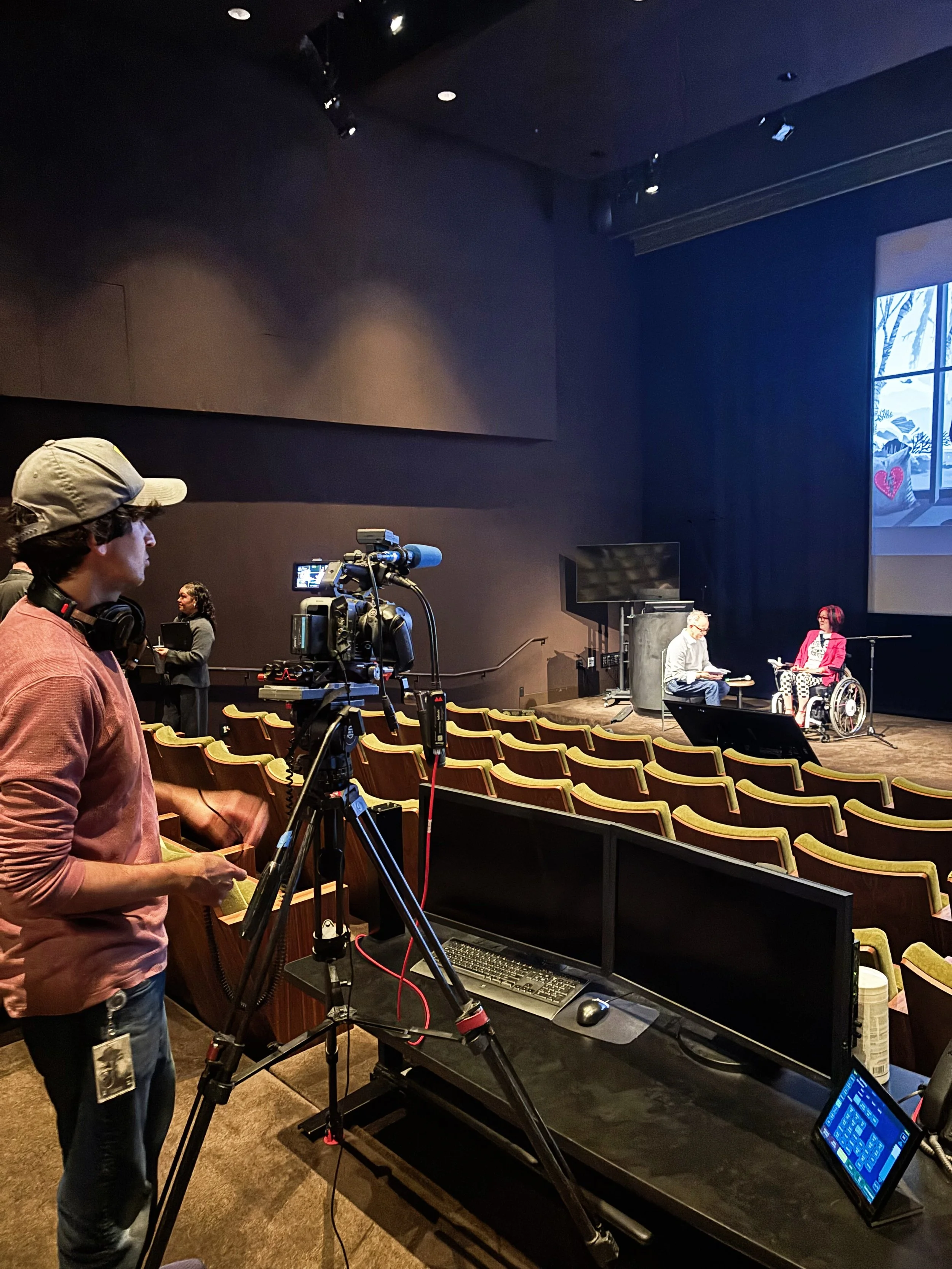
It was something to see my book at Pixar on the big screen. It was something to be where word class storytellers are and to have them recognize my picture book story as special. For others to really feel what I’ve created, not as just my story but as their own, is all I could ever ask for in my creative endeavors. Much of my life I’ve felt misunderstood, so to be in a room where people get you and appreciate you and your empathy is not only validating but healing.
As Jonas generously peppered praise for my Yumi and Monster story and art, it felt surreal. And when he said that creating storylines is one of the more difficult parts of the business, and that I made it seem “effortless,” it made me cry on the inside. I believe you can use tech all you want, but if you don’t have a good story to begin with, then it’s not going to work. So to be told that it worked was all I could ever hope for. He loved Yumi’s name, praising that even her name had so much depth and meaning.
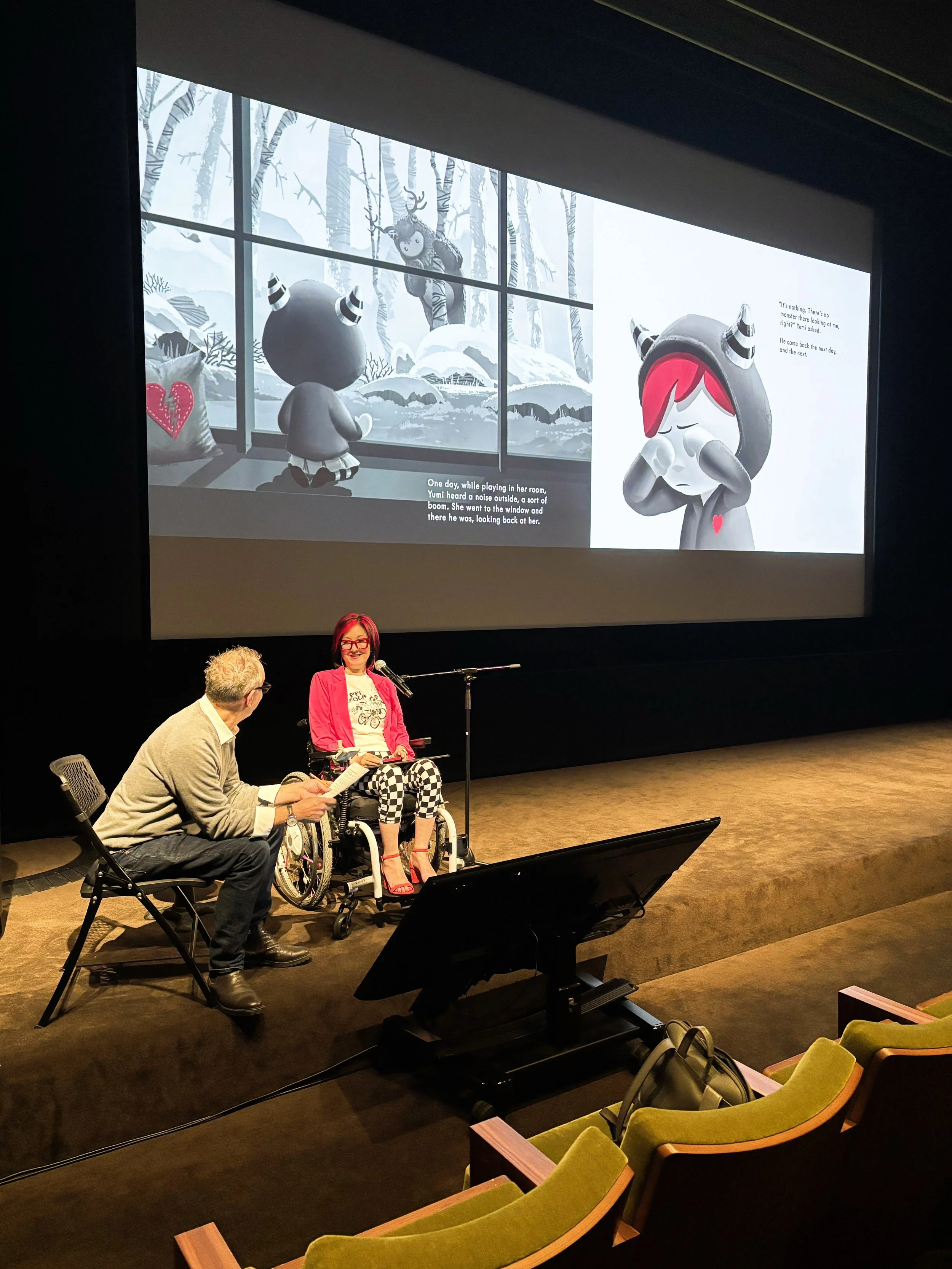
When it came to completing the reading with my Author’s Note, I was blindsided by overwhelming emotion and a few tears. I did my best to hold back while reading:
“…Today, I am near complete immobility. The experience of gradually losing my ability to walk, and then this grievous loss expanding to taking my arms and hands, has taught me a lot about the human condition, and about impermanence. It has shown me how to fully live. It has sharpened my imagination. It has fostered in me a deep love for exploration and travel…”
Reading the words I wrote about myself caught me off guard, and I just couldn’t emotionally look away. On the inside, I was freaking out that I was about to cry at Pixar… but then I tried to remind myself what I would say to someone else in my position: Don’t be sorry when you cry. Besides, the whole point of Yumi and Monster is feeling what you feel.
If you’re my friend, then you know I have no trouble crying. I’ve been bad at hiding how I feel for quite some time now. I’ve become okay with this. Tears can often look like plain sadness, but like everything, there’s complicated nuance behind them—falling droplets housing a collection of life‘s moments colliding, presenting one’s journey like a film projector eluding mixed emotions of grief, loss, resilience, fragility, struggle, love, heartbreak, adventure, and gratitude. My life has felt like a solitude introspective adventure, and this is what Yumi‘s story projects, the relationship with oneself and the importance of going on this journey for all of us. A good adventure is tear-inducing.
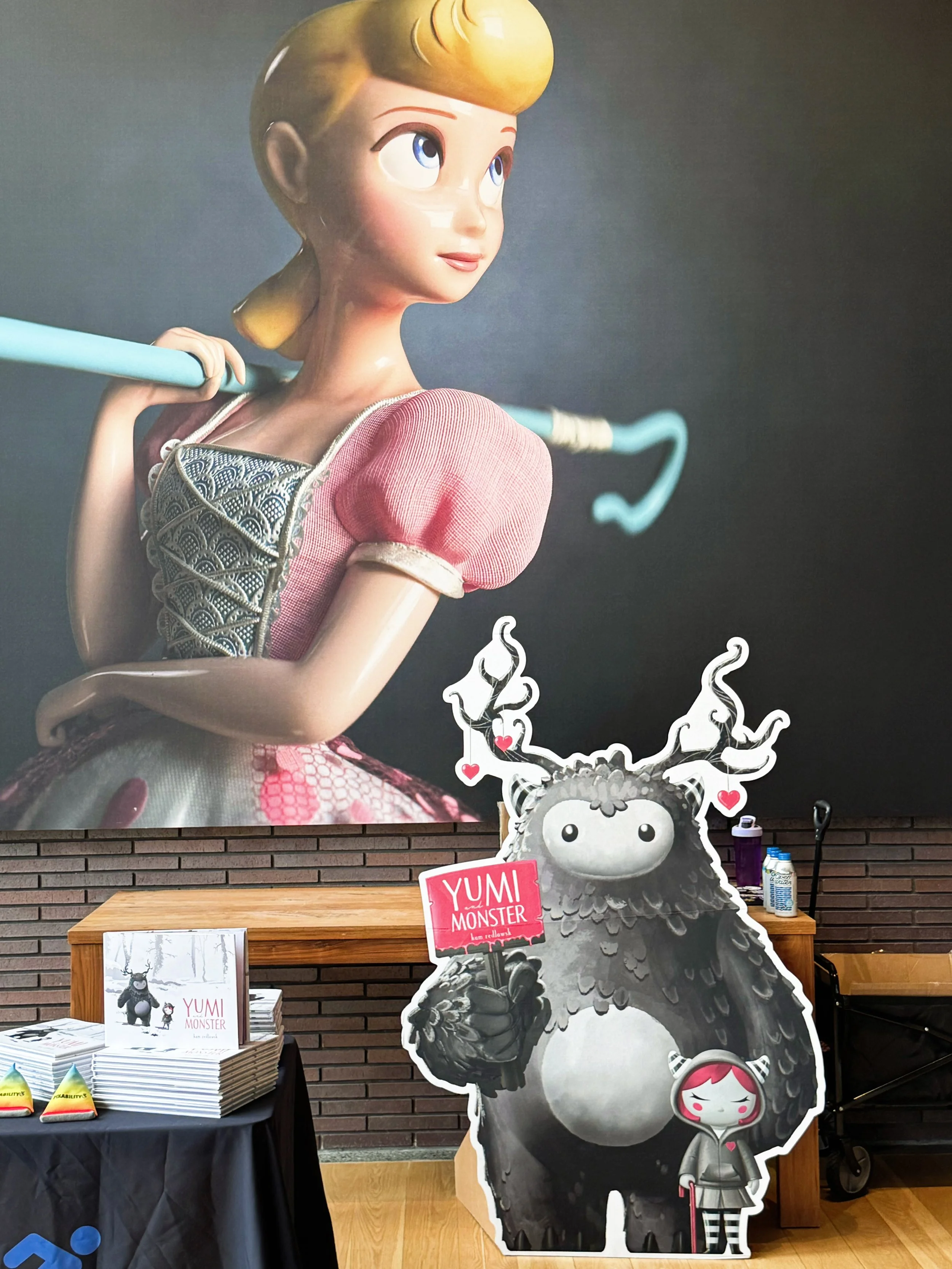
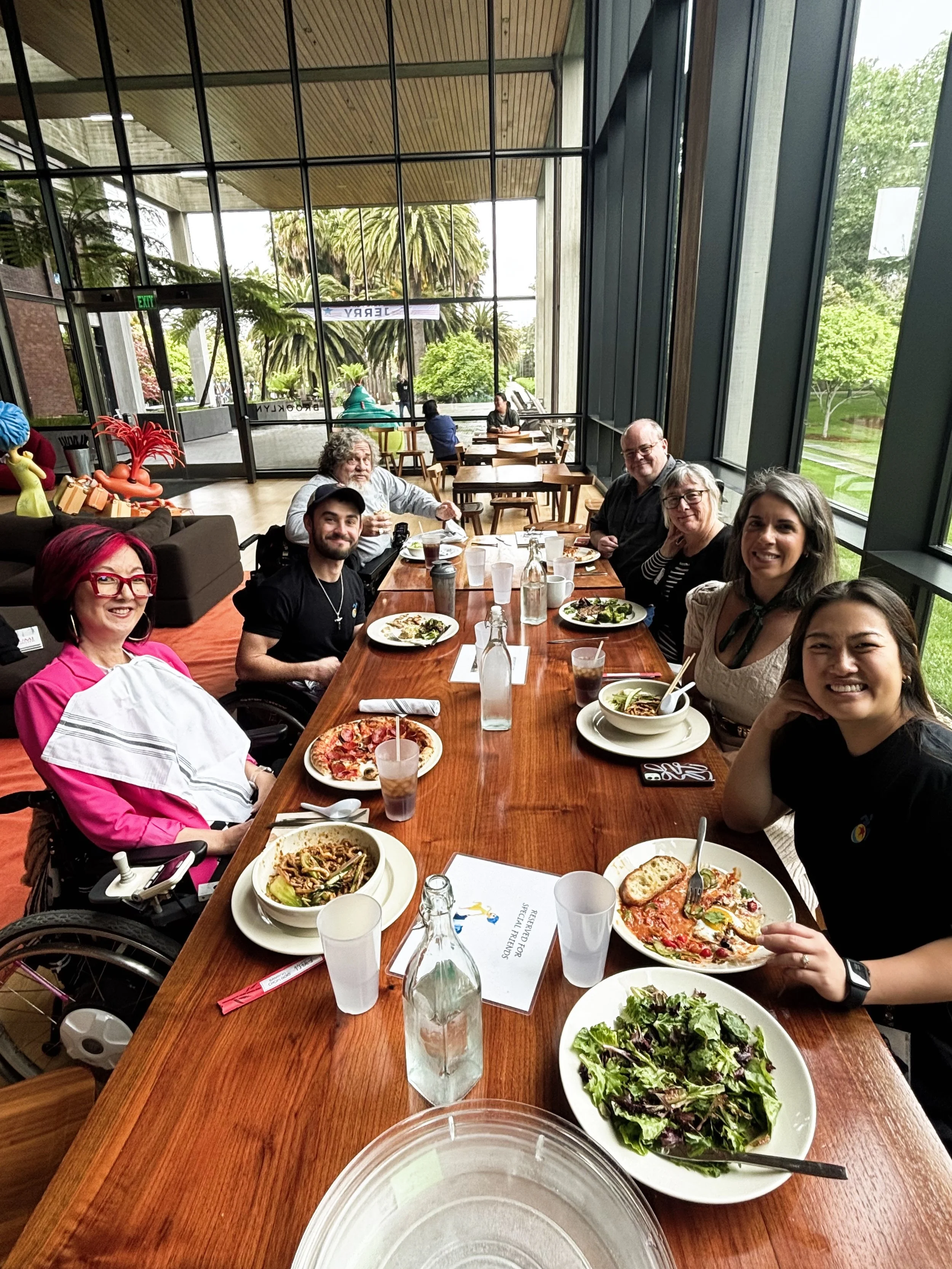
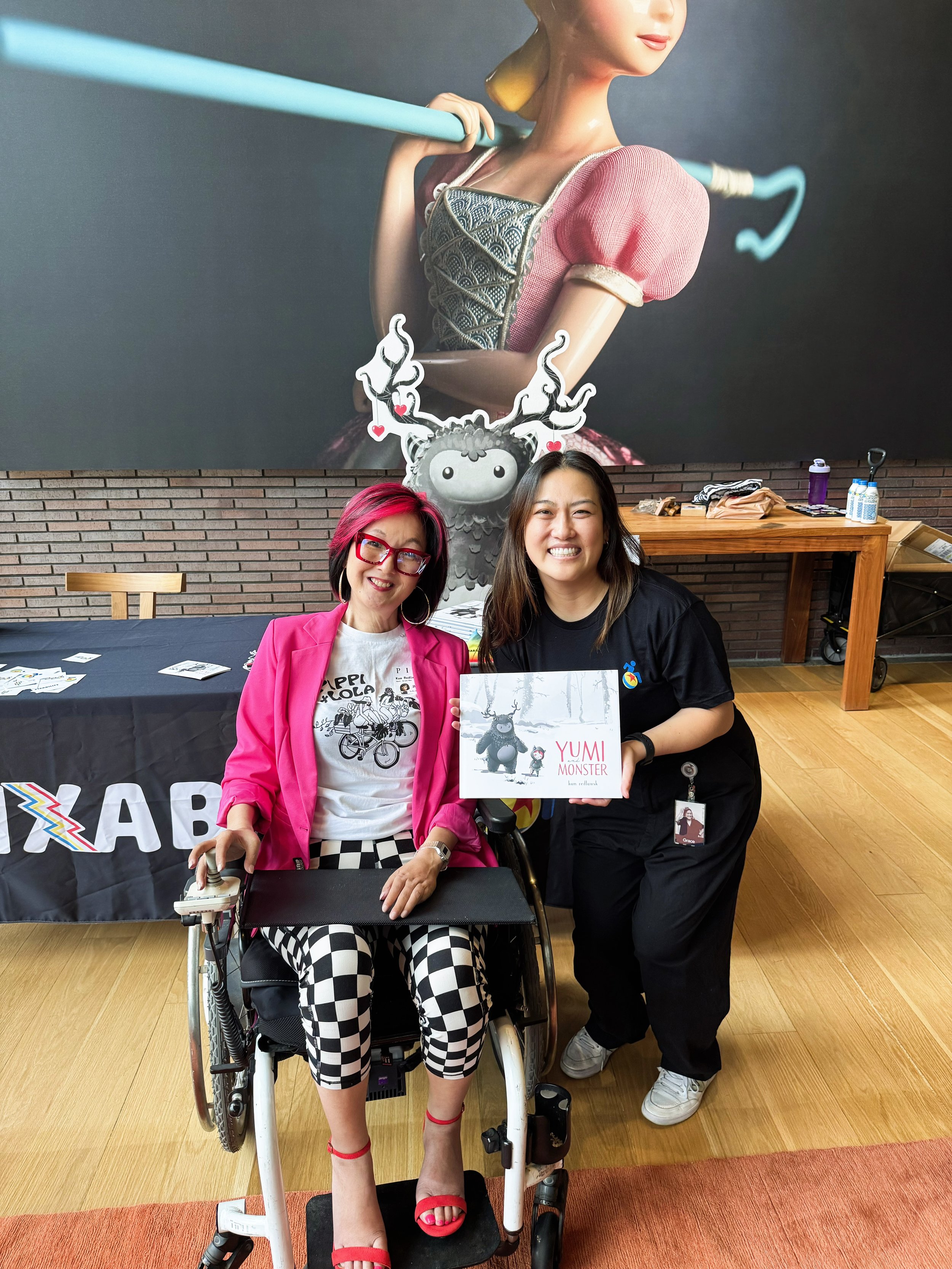
After the event, Pixability had ordered a bunch of Yumi and Monster copies and gave them out for free, so I was able to do a book signing and have a moment with Pixar employees. Then we had an amazing sit-down lunch with the Pixability team and my two guests (and friends), former Pixar director Erica Milsom and Jim LeBrecht, Crip Camp co-Director and activist. This was Jim and my first time meeting. More about Erica and Jim in a later post. It was a wonderful time having a meal, coffee, and conversation with so many lovely people.
It was never on my radar that I would author and illustrate a picture book of my story, so I definitely couldn’t have imagined that I could create something good enough to be presented at Pixar.
I majored in industrial design, a designer of products and everything around you. Many of the same principles behind designing a product are similar to creating a story and art. As somebody who doesn’t place a lot of value on the material world, I’ve fallen deeply in love with the consequences of storytelling that provokes connection, shakes the emotional canyons within us, and its ability to unite over the human condition. Unlike material goods, storytelling possesses an intangible value that can stay with us forever.
A great question Jonas asked was how I take and receive notes, and when do you know when to listen and when to follow your own gut, in which I endlessly praised my editor for essentially allowing me to create this book as a singular vision, respecting and trusting my creative foresight and lived experience. Much like designing a product, or any number of careers, I’ve found a story is a contributory process, but it’s also a balancing act for the beholder of the vision to not lose the essence of what you’re trying to say during the production process. An example I shared was of course Jason is the first I bounce my ideas off in which many times we conflict. For example, during the process of creating the story, Jason felt Yumi and Monster should be more in your face about disability, a direction I rejected until the very end.
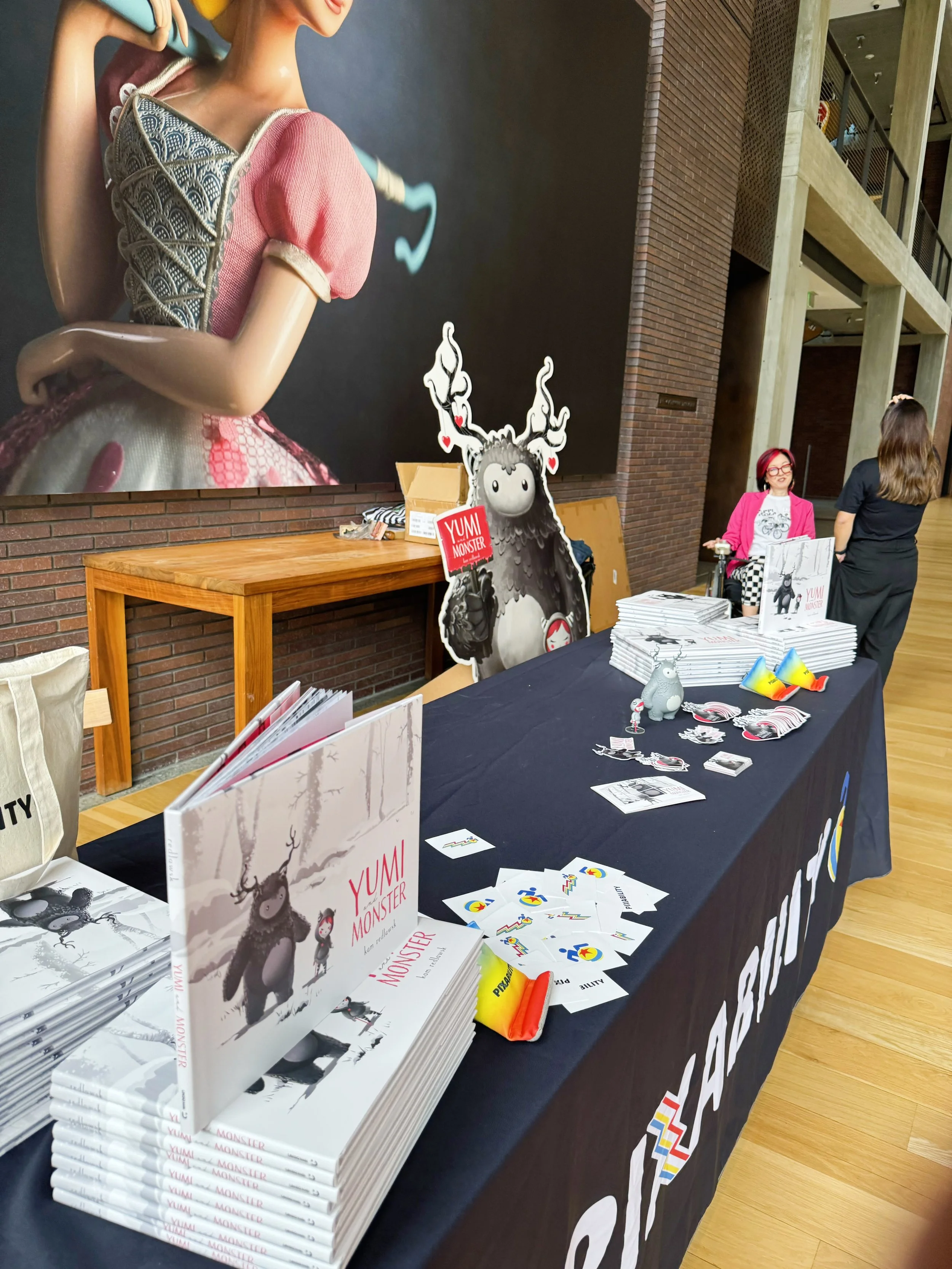
As a designer, artist, writer, and advocate, my vision and purpose for creative advocacy is to increase disability visibility in pop culture. Though Yumi and Monster is a story about disability, I wanted the experience to be universal enough that everyone could paint their own shadows onto my little story. I didn’t want to shut out an audience, telling them to watch as they learned something about disability. Instead, I wanted this to be a human story that invited everybody to understand their own humanity, and in turn, another POV that they may not be able to personally understand, but could through the extension of understanding their own core emotions.
The problem with media and film when they do attempt a piece about disability is that they mentally segregate how they approach disability as a story, which is why so many times stories of disabled people are filled with horrible tropes that limit what a story of a disabled person could be. Then of course disabled stories just are not attempted at all because the vernacular has told us that disabled stories are uninteresting and stale. What they’re all getting wrong is viewing disabled people as a “disabled story” instead of a human story. This is what I aimed to do with Yumi and Monster.
Though I’m disabled and sew this aspect into all my creative advocacy, I’m really just sharing the personal lived experience in the unexpected winds life brings us, and that these changes inevitably happen in all of our lives. What is more universal than the impermanence of the body, change, the uninvited, and that perceived barriers aren’t the end of us but an intimate part of what it means to be human? Many parents have had to experience their own child’s illness and disability. Many children experience the body’s fragility. Many teenagers, young adults, and elderly are no strangers to illness and disability; one of the most universal truths about humans and life. Over 1 billion disabled people worldwide have a significant disability. We are the only identity that anyone can become a member of at any point in their life. Our story is a human story.
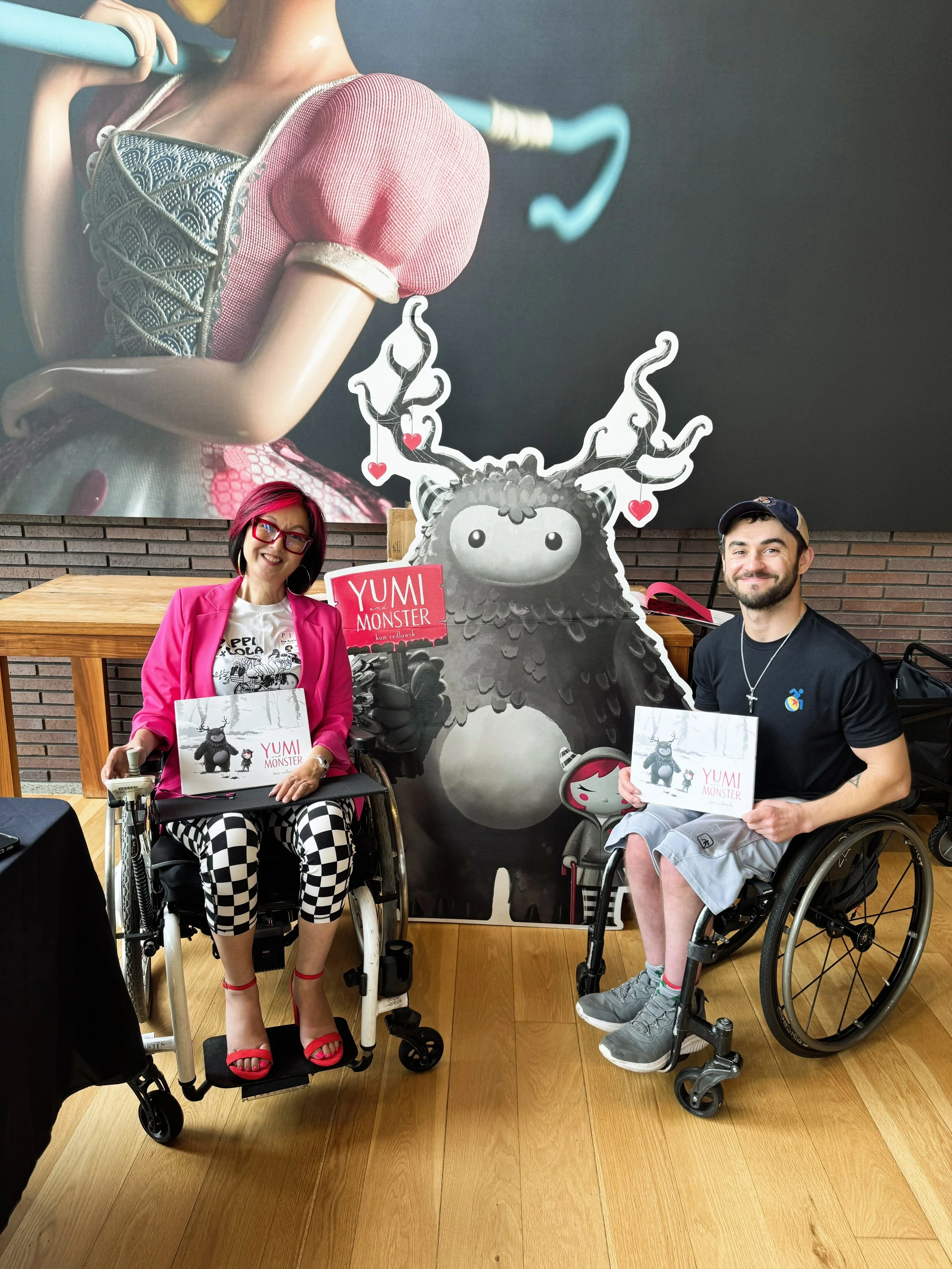
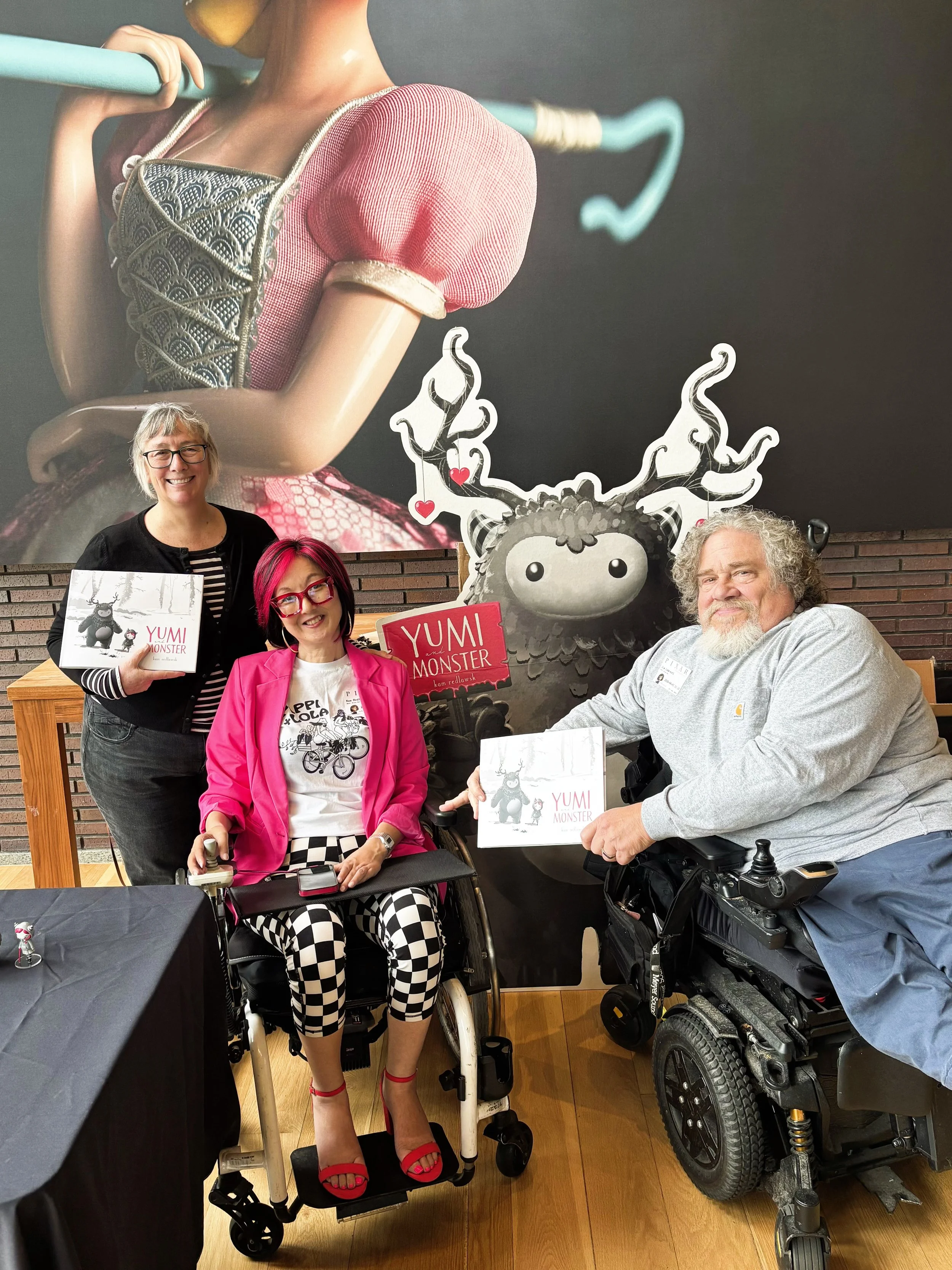
For me, my advocacy is about arming the public with the imaginative power of seeing ourselves from another perspective in order to ultimately arrive at the conclusion that we are all living the same experience. Everyone can identify with not wanting to be who they are. Thus the significance of my book’s final line, I am only me because of you.
“The beauty of a living thing is not the atoms that go into it, but the way those atoms are put together.” -Carl Sagan
While my body is progressed to immobility, and I’m often counting the time I have left with my fingers, fortunately storytelling only requires my mind and self. I’m lucky that my actual skills don’t live in the physical work, yet it’s my passion, expansive vision, branding, and design language consistency that I am best at. I don’t have to physically move to do any of this.
I have so much I want to say that it often feels like I’m going to burst, so any chance to creatively express the world that dwells deep within me is a moment well appreciated. So thank you for the memories, Pixar. A special thank you to Jonas, Grace, Cody, Darianne, Jamie, Kirsten, Sam and Pixability/Pixacare for putting together such an amazing event, and to Erica and Jeremy. It was wonderful to spend time together. 💗