It’s Rare Disease Day, so I wanted to share an honest snapshot of what a progressive rare disease can feel like.
This progressive rare disease has broken my heart a hundred times in a hundred different ways, but it also has been healing.
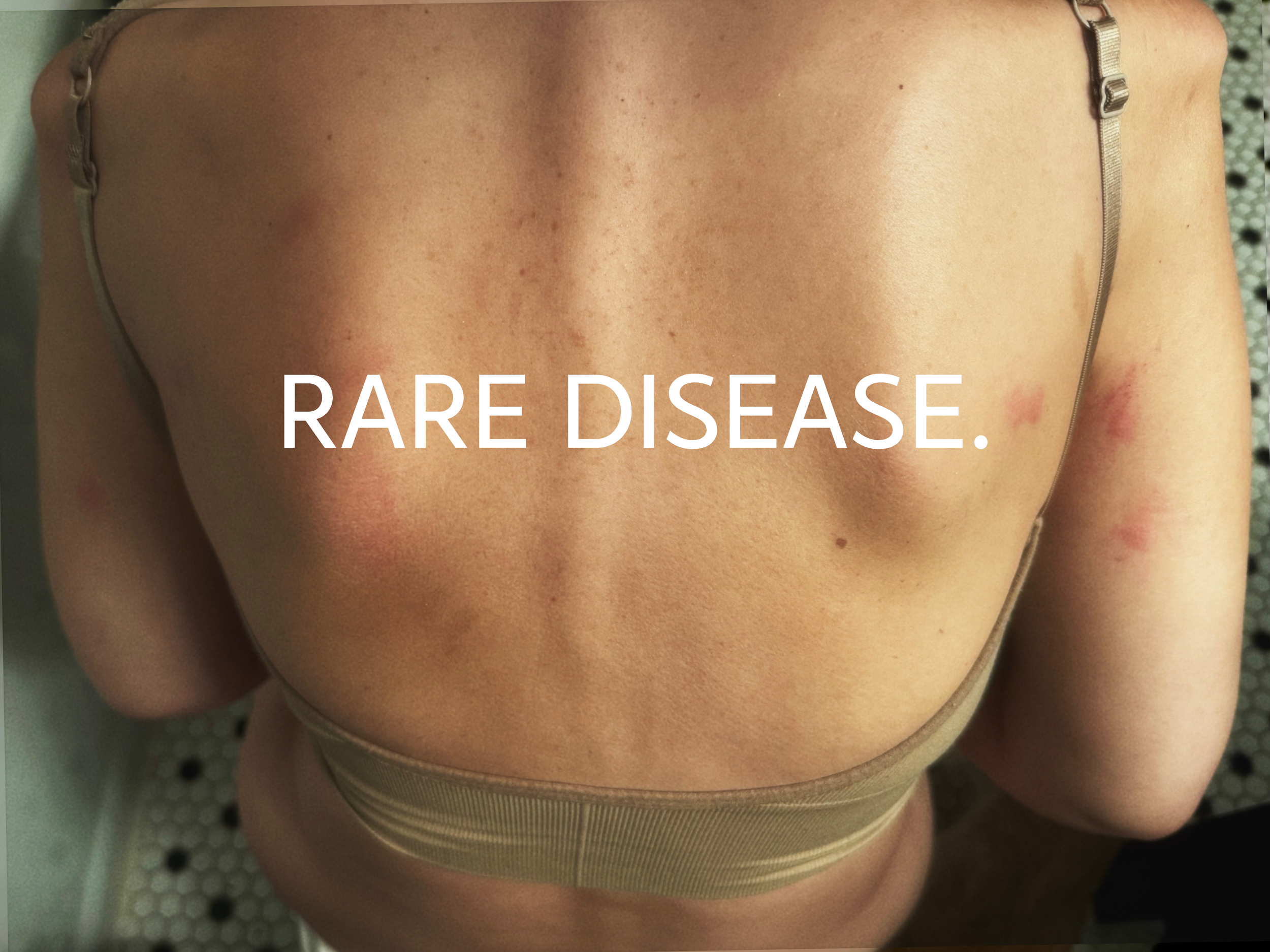
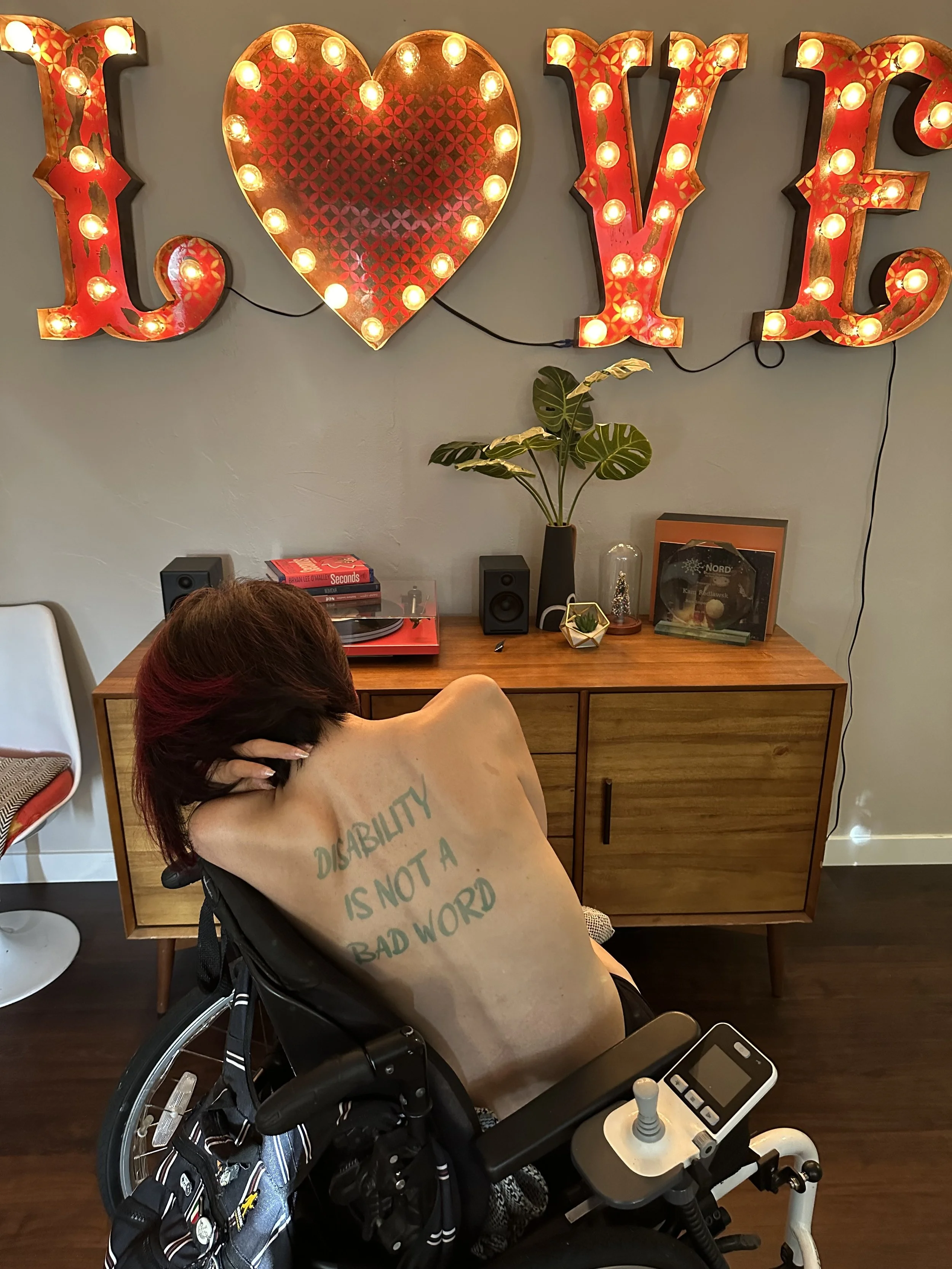
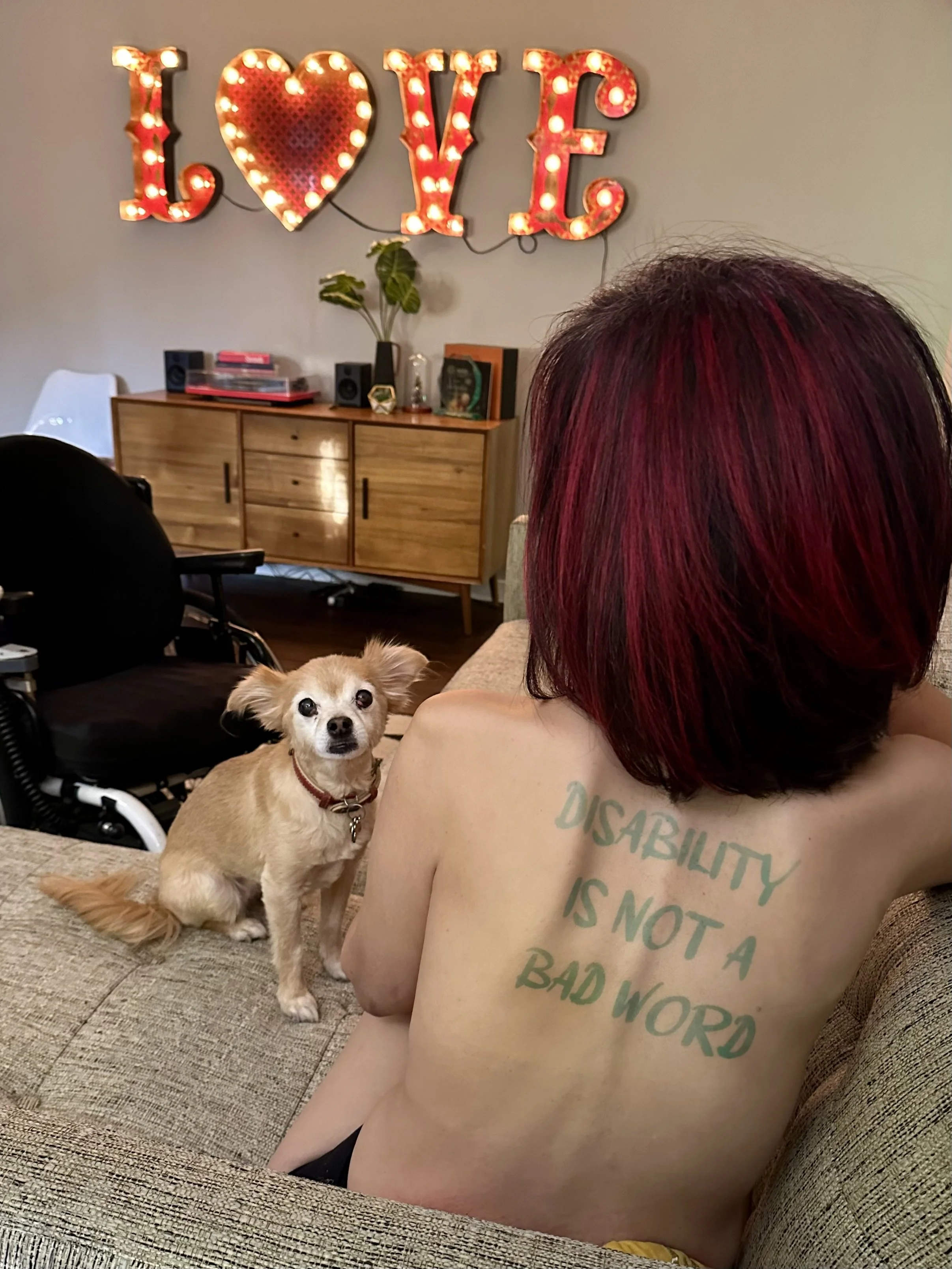
When this photo of my back was taken, I noticed visible bones once never seen—left behind from ravaging muscle depletion. This photograph is a couple of years old, so I’m even bonier today. My shoulder blades are now pronounced—the corners of my shoulders cut out where the scapula and humerus meet, creating new foreign shadows. I don’t like this look for several reasons, but mostly because it’s a reminder of what is still happening to my body.
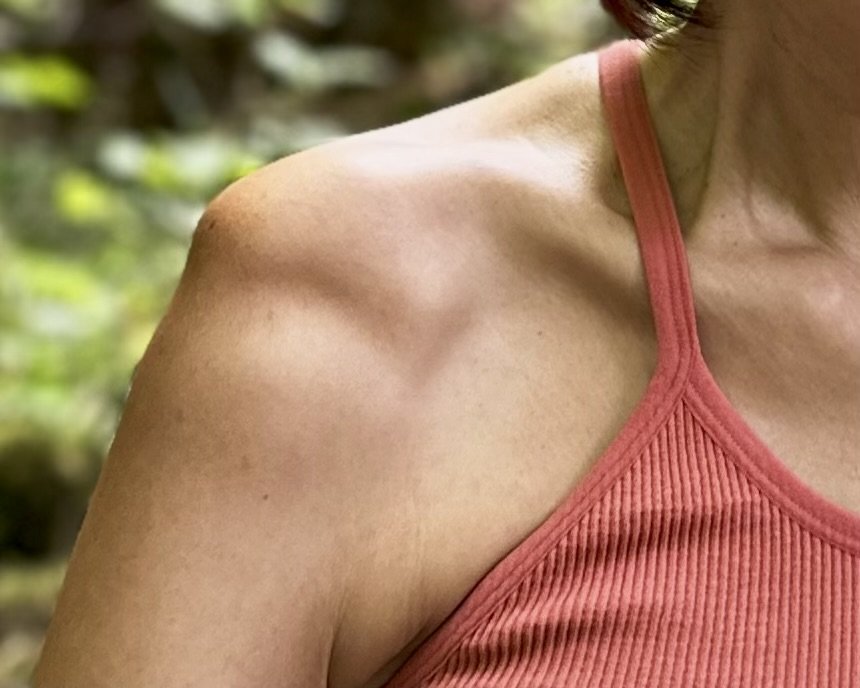
My rare progressive muscular dystrophy that I have had since I was 15 years old has moved beyond the physical weakness and lack of mobility, and towards the change in the visibility of my body. Perhaps someone passing by wouldn’t notice the degradation journey my body, my mind, and soul have been through, but its history whispers in everything I do.
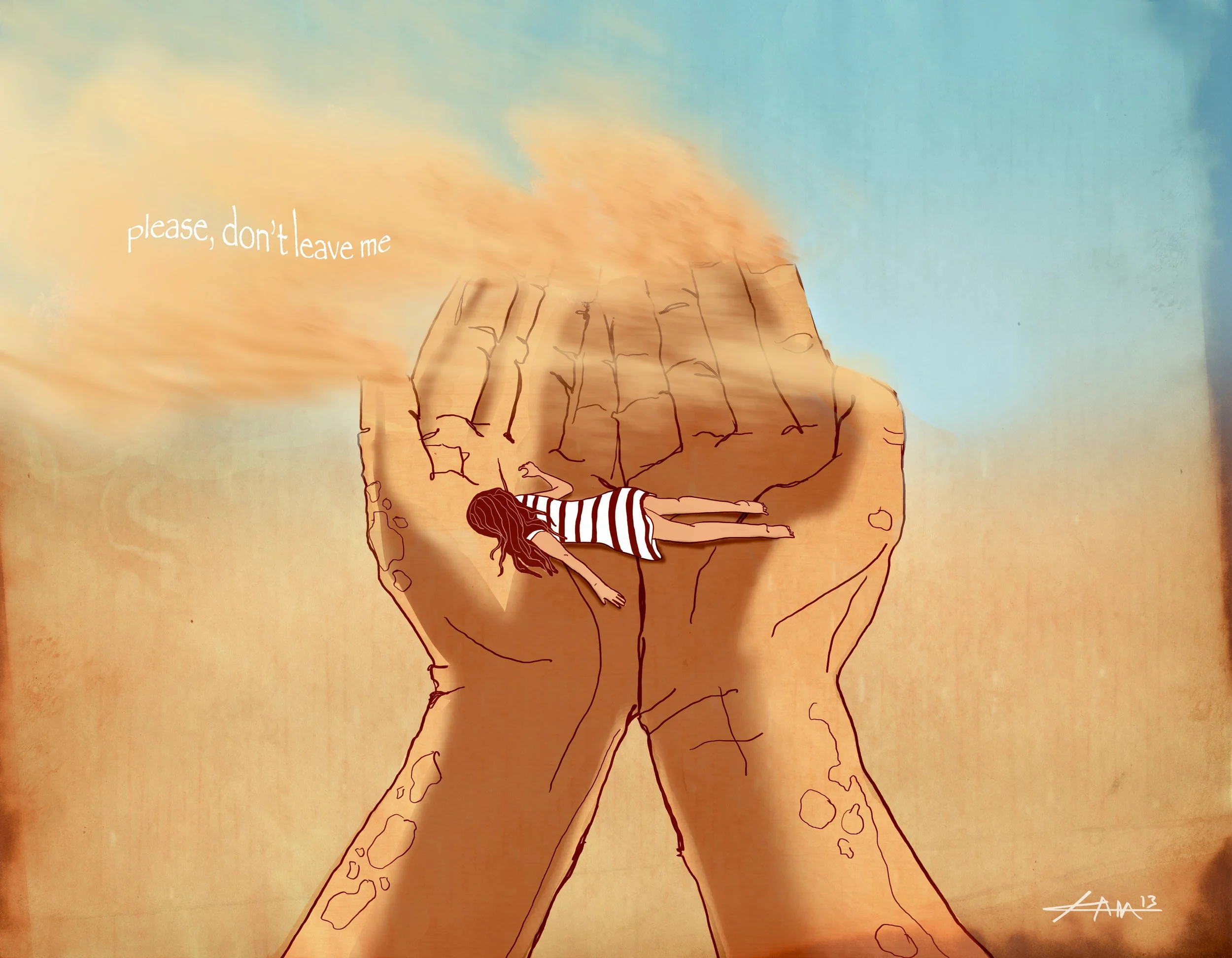
I drew this illustration, PLEASE DON’T LEAVE ME, in 2013. The little girl (me) has thrown herself onto her own hands with the earnest plea, “please…please, don't take my hands, too.”
Every illness and condition progresses differently for each person - my deterioration began in my legs and below the waist. It wasn’t until 2012 that I could sense remnants of weakness creeping up my body, traveling to lands I never wanted it to see. My hands are the last thing on me to progress besides my neck. After this, the dissolving of all the unseen internally will come in time.
This body. A body that used to move. These hands. Hands that lovingly used to constantly cook (from scratch) for friends and family. Hands that could easily draw. Hands that could dress and feed this body. Hands that could independently embark on solo road trips with the sole objective of getting lost in this world—in myself.
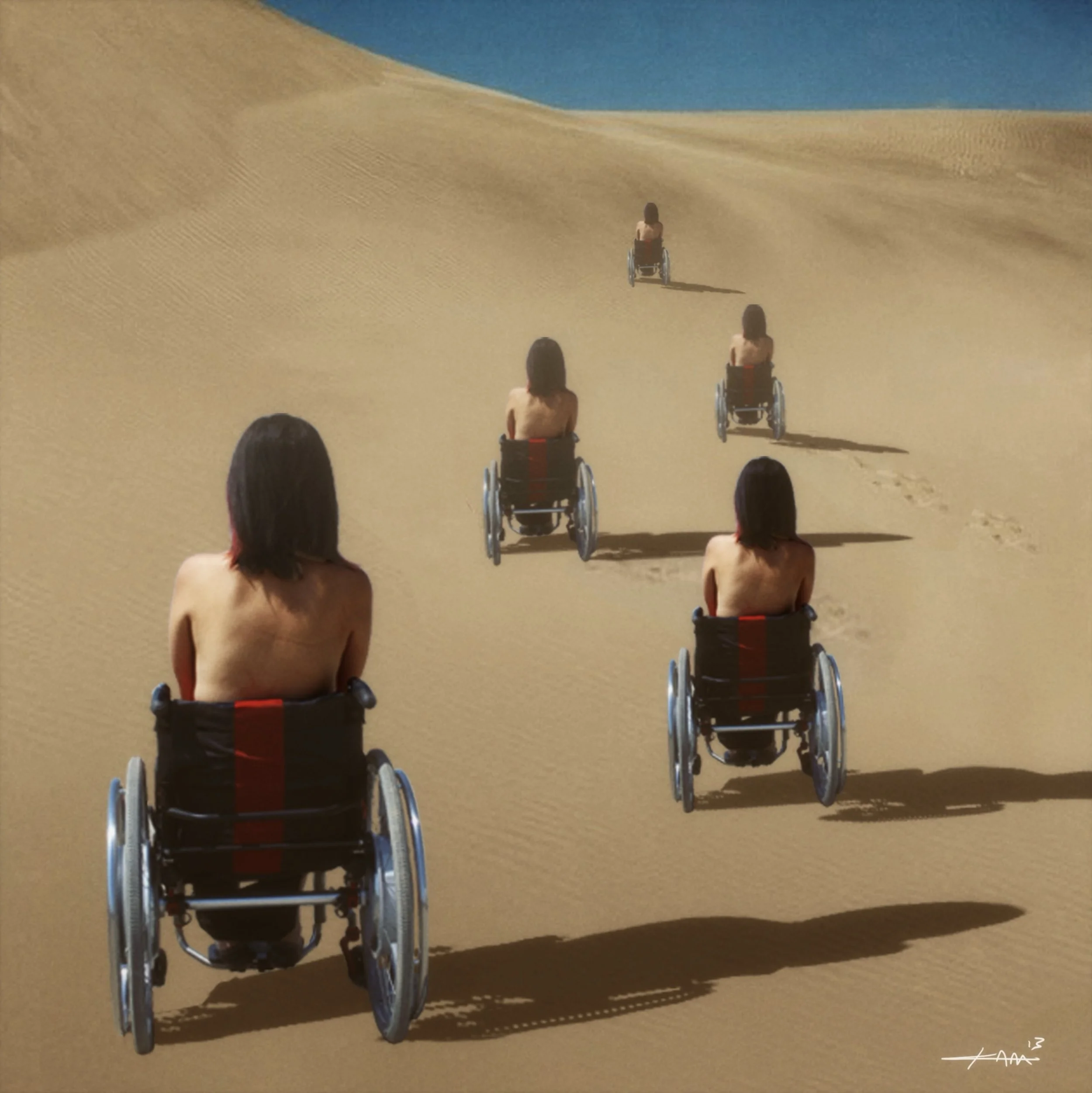
These hands have been slowly distancing themselves from me over the years. I hate it—like two strangers existing in the same body. I have a very rare and progressive muscle-wasting condition called GNE Myopathy that has been taking me to complete immobility since I was 15. I drew this illustration in 2013 to visually express the noticeable weakness and loss suddenly permeating throughout my upper body, hands, and arms. What was is lost in the wind, never to be again.
The simplified message typically garners the most attention and following, like outrage, shaming; a clear “bad guy” and someone or something to hate, or only selling empowerment as a disabled person because of the fear of appearing less than. This is not the kind of attention I want. I want to talk about the realities of loss void of fear of perception. I want to talk about struggle, grace, triumph, the human condition, and more of what is gray than black and white. I want to be real about disability, not fake or singularly blaming ableism, as if without it, only then would everything about disability be perfect. Maybe for some, but for my rare condition, loss is a never-ending game, and independence nevermore. Completely losing all autonomy, down to scratching myself, is not easy, and I don’t have to pretend it is.
So here we are. At every milestone, I do my best to accept this impending destination as no treatment for my condition exists. I'm constantly struggling with the knowledge that this game won't end until it's eaten up my entire body. I'm struggling with feeling more frail, in pain, and weaker every year. I'm struggling with wondering if I'll die young. I'm struggling with losing my hands as the weakness spreads. I'm struggling with knowing one day very soon I’ll no longer be able to draw—another form of self-expression taken from me.
Throughout the stages of progression, I've always held the security that at least I have my hands—my creativity—and that I can write and do almost anything as long as these fingertips can continue tapping furiously on its phone. But this is even changing. My next significant milestone of loss is the ability to draw and use my phone independently and freely. I’ve been experiencing these milestones for the last couple of years and can feel the ticking clock of my ghost-like fingers closing in on me.
Losing my hands is the milestone I've always dreaded. Slowly losing my legs was arduous, but that was nothing, nothing like losing my hands. Society always thinks losing your legs is the most devastating thing that could ever happen, but losing your arms and hands is 1000% more difficult; especially for such a curious, creative person who expresses themselves physically. I cannot express how much the milestone of completely losing these hands devastates me. These progressive milestones feel like the death of a dear loved one, except it happens over and over again.
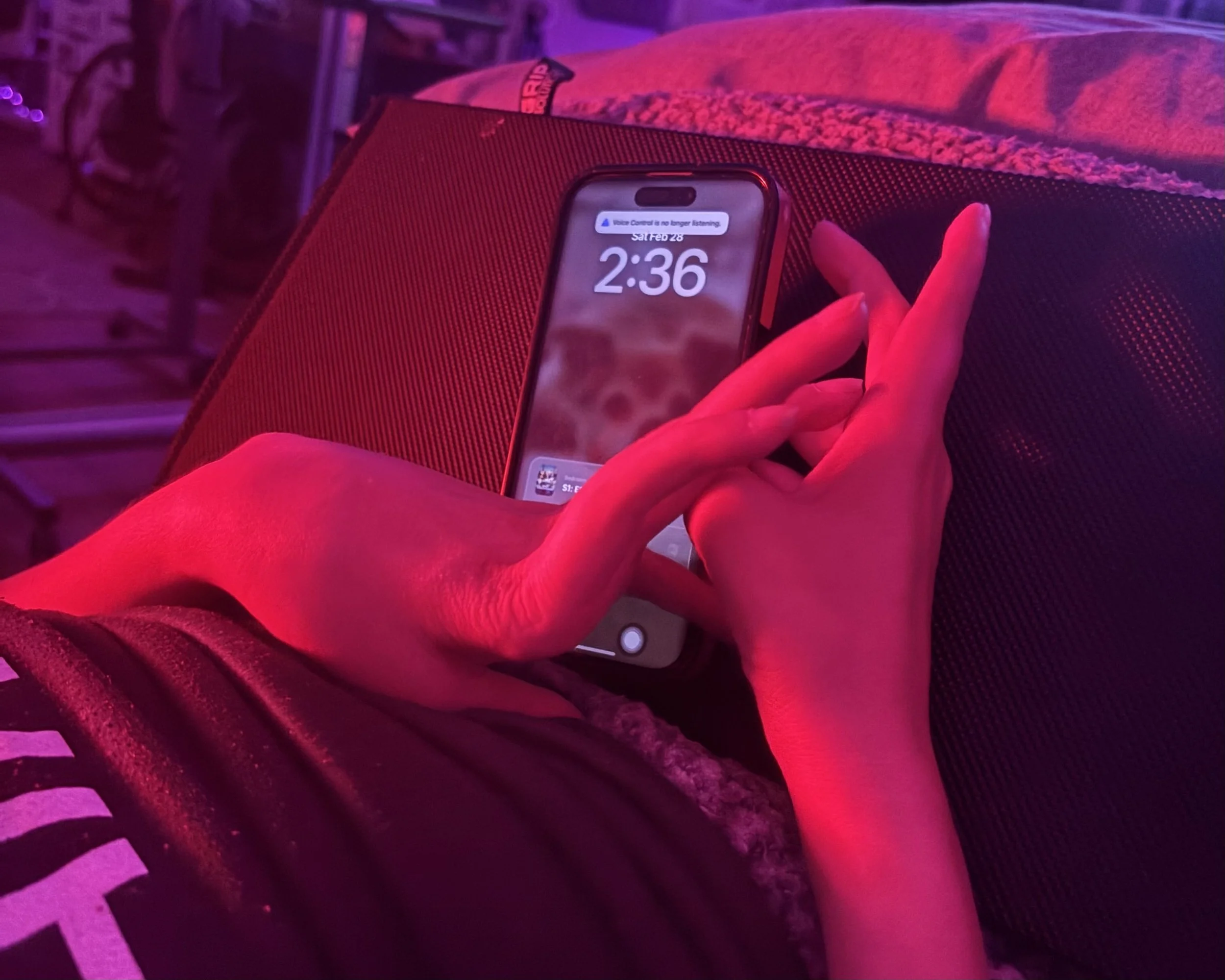
My weakening hands are affecting how I interact with my phone; my lifeline. My consolation through the milestones has been, at least, I can use my phone. But my fingers now struggle scrolling and are unpredictable as they accidentally delete posts, comments, or unfollows; something I've received angry messages for, causing me to slowly sink into myself out of embarrassment because it feels like an attack for something I can’t control, and yet they're following a physically disabled person... (grace before immediately attacking or shaming is always encouraged.)
It is I who handles our house affairs logistics, and schedules; my contribution to this relationship is this planning, researching, booking, organizing, and navigating our daily life from my phone. This is now challenging.
I have so much to say, but such little time. I write in bed on my back during nights of insomnia. I write in planes, trains, and automobiles. I'm always writing thoughts, ideas, or questions for humanity on my phone - here, there, and everywhere. It's constant. Now this unbridled freedom is diminishing, too. Perhaps this is why I write such long posts, for I know one day it won't be easy; it’s already difficult today.
When I look at my hands, I see languid sentiments of what once was. They look drained, always in pain, and disfiguring. My pointer, middle, index, and pinkie fingers no longer bend, and are weirdly curled. They now speak for themselves. This experience is bruising. My hands, our hands, they do so much. "I don't need legs. I'm fine being in a wheelchair, if only I could be independent (like many disabled people are) and it didn't deteriorate my upper body.", I tell myself. But I don't get to choose. It is as it is.
I don't share an honest disabled perspective for pity or sadness. I just want to be open about the full spectrum of this experience for those who struggle; those who are newly disabled searching for treatment and acceptance, or those who have been disabled for a lifetime and still working on it. Even the most confident disabled advocate has a day of disliking disability, so don't be fooled or feel guilty for genuine feelings. There's a difference between being proud of your disabled self, and struggling with all that comes with it. I don't think we have to choose. My position on the bravado of disability pride is we have to admit tender moments exist beyond society and ableism.
The loss is never easy, and longing for what used to be never really goes away, but there is comfort in knowing there is a path forward for everything. This is the wonder of life: it can move in so many different ways. So. Have faith in yourself even if you’re so rare that nobody sees or knows about you.
When it all feels dark, I try to remember one of my greatest strengths is adaptation. Of course, I'm afraid, but I have a strong sense of self. My drawings are physically drawn, but what you're really seeing beyond the drawn lines is my true self splashed on a page. Art, creativity, and expression live within me, not in my limbs. It's not my hands, it's the person. And this can't be taken from me. So I try to have faith in myself that the core of who I am won't deteriorate in this constant loss, and I’ll find new ways to express.
Thirty years with this condition has taught me so much. Despite all the destruction in my body, I’ve also gained much pride and confidence. I don’t like the resulting imagery from this rare muscle-wasting condition, but I’ve chosen not to cover up my bony-looking shoulders or body, and neither should you.
My rare disease and disability has pushed me to move forward, explore, and find new loves. Disability has taught me life is about working with what you have and what you are, like a designer or engineer who has to adapt and work within project parameters and limitations to create new opportunities.
One of the reasons I felt that there was no choice but to help advocate when given the opportunity is the understanding that because I was so rare, it was my responsibility to speak up and share this perspective, this rare disease, this life. There are 300 million people with rare diseases globally. More than 30 million Americans live with a rare disease. And yet, people with rare diseases typically don’t have treatment or even science working on treatment. Rare diseases are many times fatal, especially rare disorders for children. Approximately 30% of children with rare diseases may not live to see their fifth birthday - many oftentimes genetic, with many conditions considered more treatable than cancer… If only they received the attention.
Today, over 95% of rare conditions still have no FDA-approved treatment. We are the unknown—typically not thought of just because there are fewer of us—despite research and development for rare conditions often being helpful for mainstream conditions. Many people with rare diseases don’t have the benefit of time. You can help gain more awareness by sharing rare disease stories like mine. 🖤
#kamdraws #kamswheelstravel