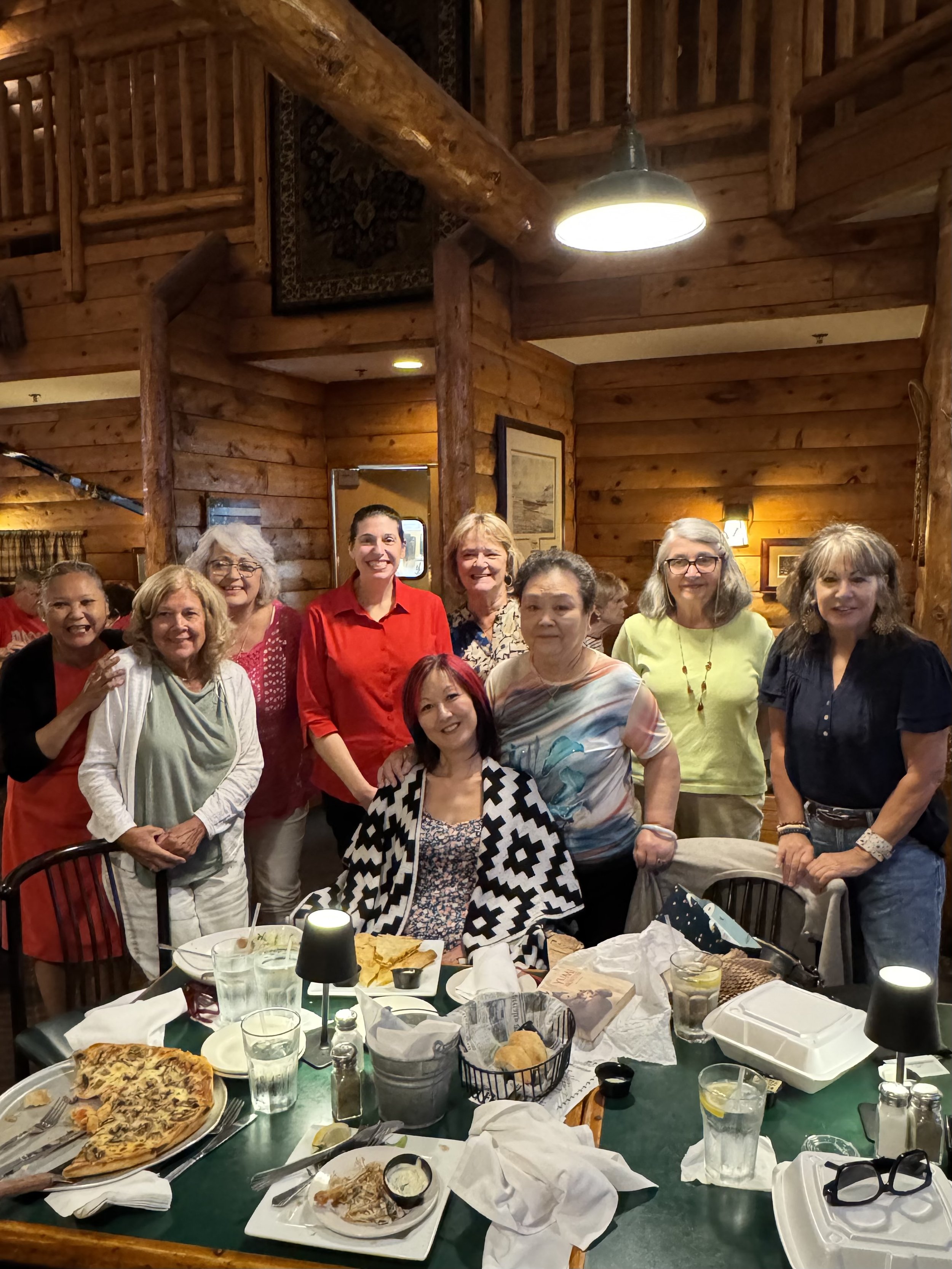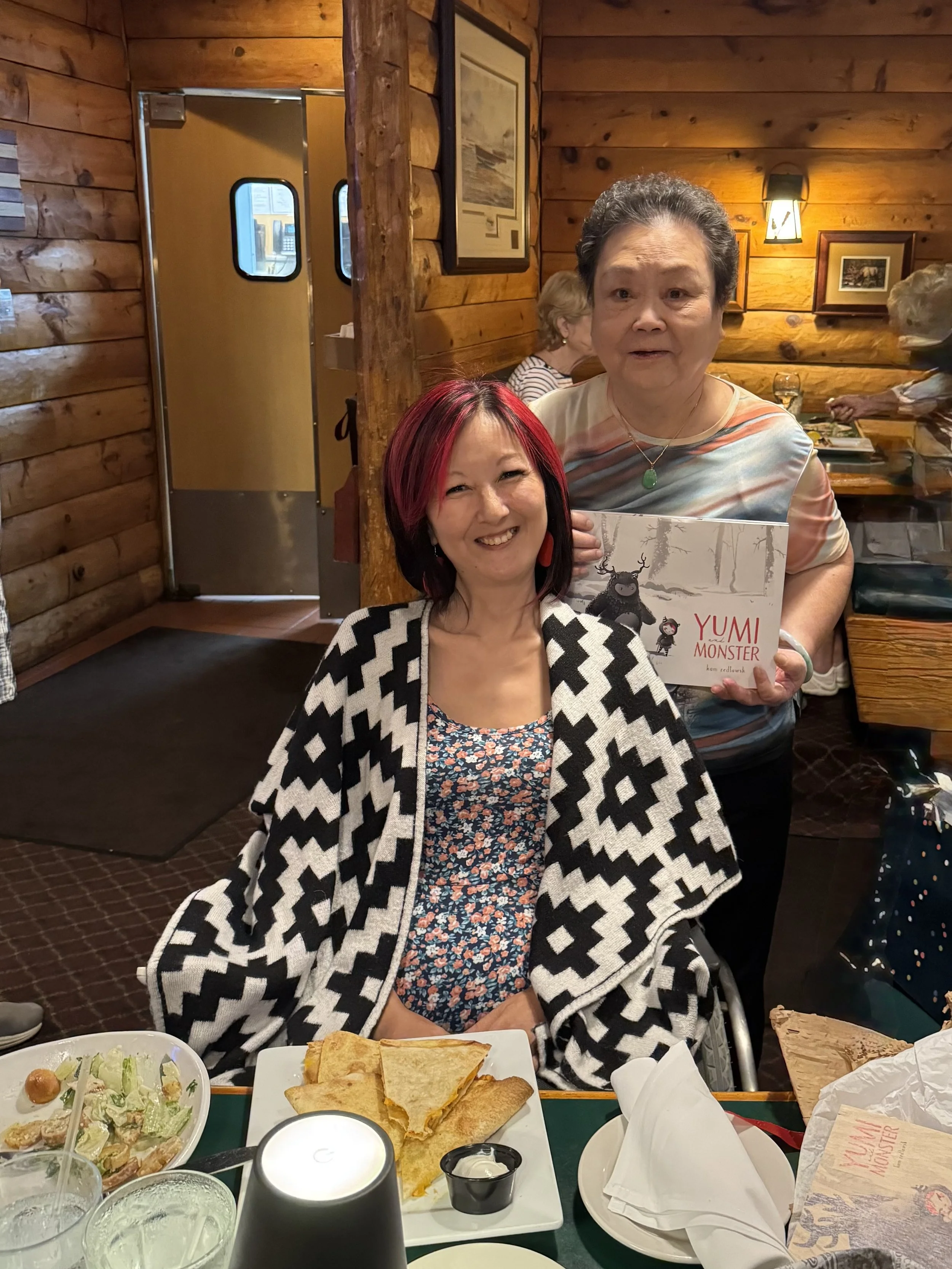
Just a couple of Michigander Asian immigrants.
While in Michigan over the summer for my homecoming book event celebrating Yumi and Monster’s year in the world, I also did a little Leong’s reunion; an important time in my life.
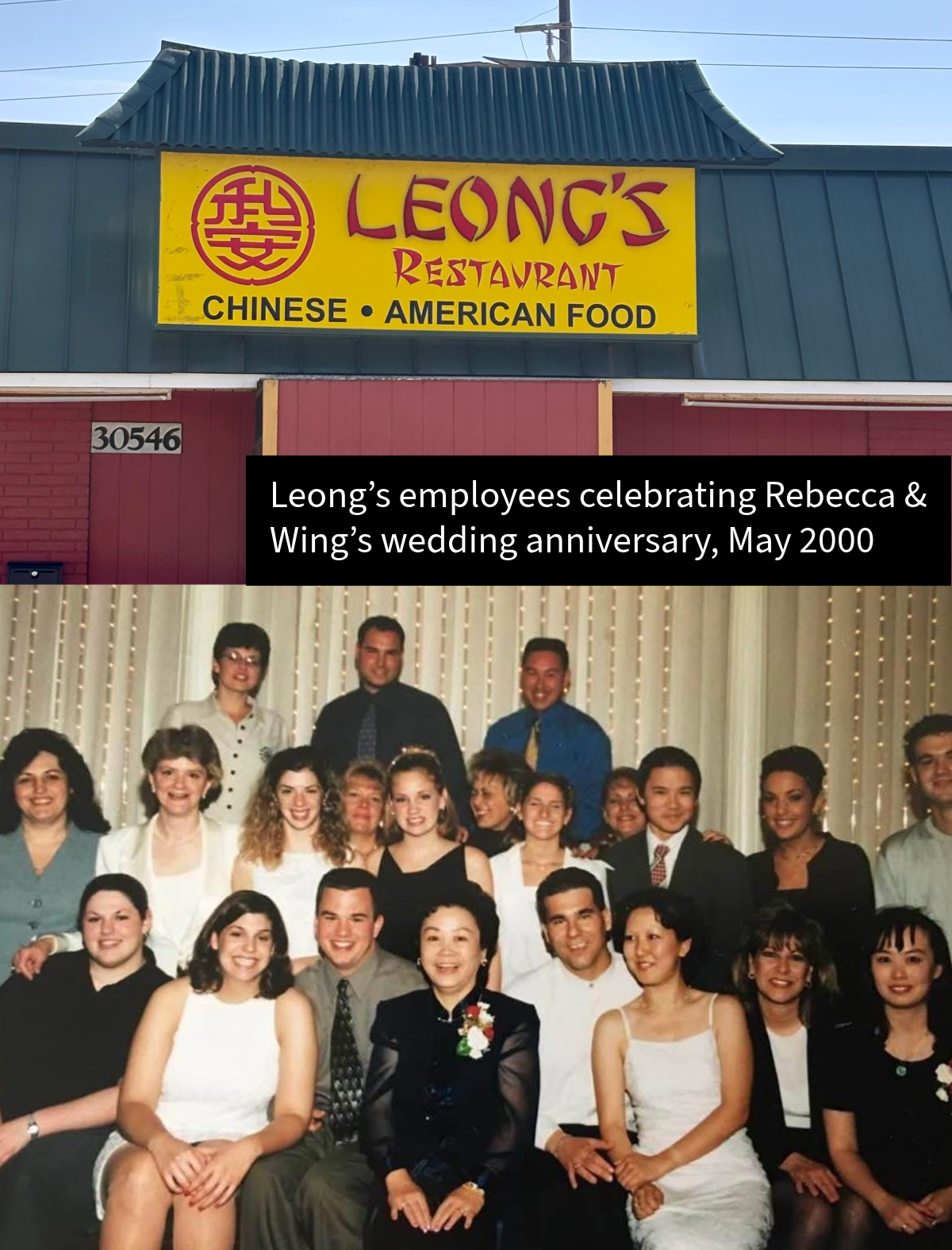
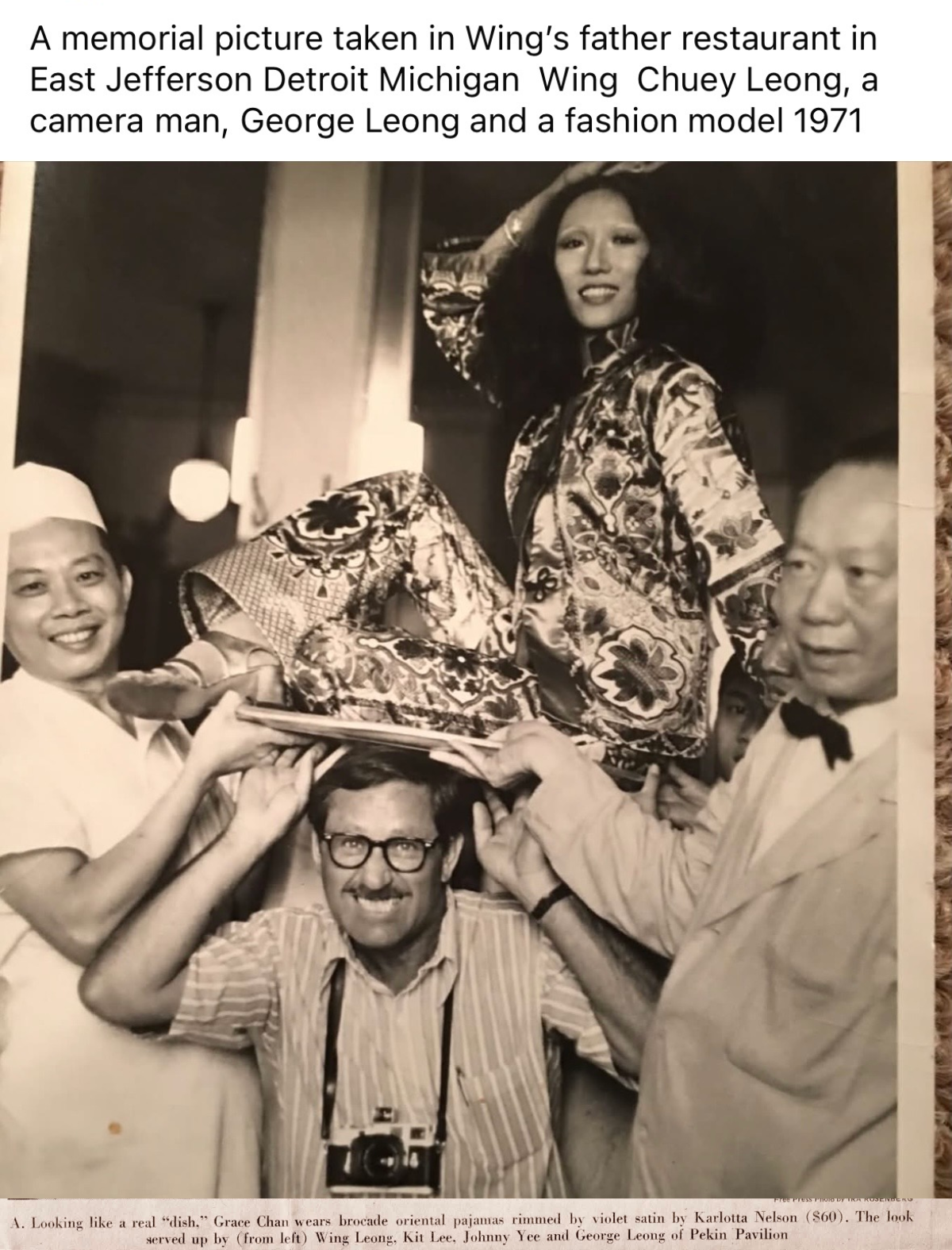
Leong’s is a Chinese restaurant that began in East Jefferson, Detroit, back then called ‘Peking Pavilion’, by Chinese immigrant owner, George Leong, and his son, Wing Chuey, who came to Detroit in 1964 to work in his father‘s restaurant. In 1970, Wing married Rebecca, who then immigrated to America, where they worked hard together for decades to build what would become Leong’s Chinese restaurant; a Chesterfield/New Baltimore staple, the town I grew up in.
After getting married in 1977, Wing and Rebecca opened Leong’s on 23 Mile, the very first restaurant I happened to visit as a little 4 1/2-year-old Korean adoptee new to American soil.
Next, Rebecca and Wing opened ‘Hing Leong,’ in Marine City in 1980, which they sold in 1985, and then opened their third restaurant in Richmond in 1985, which they sold in 1988. Their final and fourth restaurant they would open was in 1987 on 21-mile Gratiot Avenue, the very Leong’s I ended up working at through my teenage years and early twenties.
In 1983, after my (adoptive) parents picked me up at the airport, the story is that my mom hurriedly took me to the Leong’s on 23 Mile, pleading with the owner, Rebecca Leong, on what she should feed me. Rebecca simply replied, “Rice!”
Like many in the town I grew up in and beyond, Leong’s, in my opinion, was amongst the best Americanized Chinese food in Michigan, then and today. Even in California after 20 years, I haven’t found an (American) Chinese restaurant that is as good as Leong’s, from the best eggrolls and wonton soup that I can’t find anywhere else, including in Michigan, to their egg foo young, fried rice, and stir-fries that are different in California, though we do take the prize for the best authentic Chinese food in LA, and plenty of it.
This assessment that Leong’s had the best food and eggrolls could be just because I grew up on them; we all know that tender nostalgia of comfort foods from our past that provide warm memories and superiority just due to its connection to childhood… but I’m pretty sure they are the best including their eggrolls and the accompanying homemade plum sauce which are so specifically good, with bean sprouts, don’t offend me with cabbage, that over the years in California, back when I could still physically cook, I’ve tried recreating the famous Leong’s eggrolls myself, often for my California friends, which remarkably I have come close to (a helpful tip is I know one of the secret ingredients most people wouldn’t expect), but still they’re just not the same as Leong’s original safeguarded recipe.
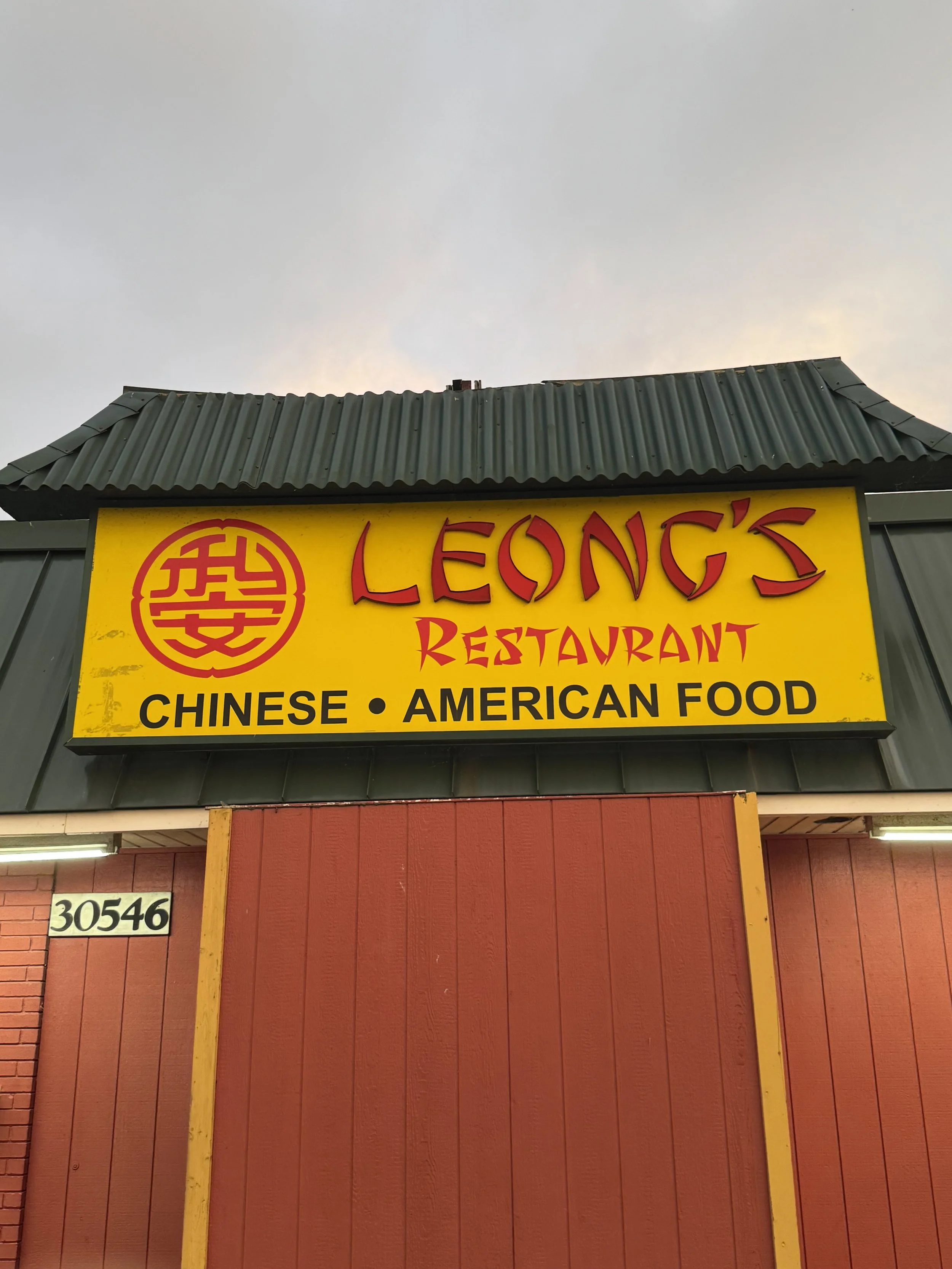
Growing up, Leong’s was a staple in my family, including its annual appearance on Christmas Eve, a common American tradition depicted in ‘The Christmas Story’. My parents had this knack for developing friendly relationships with servers in restaurants that we frequented, which were typically atypically male, including at Leong’s, where we eventually transitioned from eating at their 23-mile to 21-mile and Gratiot location in my preteen years, and where I began working when I was 16.
Leong’s was a core job I had throughout my formative years that made a lot of difference in my life. My parents were not wealthy, so as the little prudent “saver” that I was known for, it was understood at a young age that I would be financially responsible for my own life, paying for my own cars, insurance, clothes, and college. As I got older, I continued to work at Leong’s, even adding second and third jobs, like Kroger as a bagger, an animal shelter, and Home Depot, in order to put myself through college… seven years of school to be exact, all while enduring an epic diagnostic journey.
By 14, I was experiencing odd effects with my body, which would eventually be diagnosed as GNE Myopathy; an extremely rare and genetic form of muscular dystrophy inherited by biological parents I’ve never met. Both of them were carriers, and it physically manifested in me, meaning they did not have muscular dystrophy, but they carried the mutated gene that they then gifted to me. This missing puzzle piece of a diagnosis arrived after 6 misdiagnoses.
From Michigan, I moved to California 20 years ago, and every time we’ve returned, with four different sets of parents, it’s been difficult to keep in touch with old friends and people who are meaningful to me, including Rebecca. Since both of my parents have passed, I now try to see extended family and those I used to be close with, but have missed over the years since my teenage and college years. I’m in a time where there aren’t many people left from my past.
Currently, I’m working on some new creative projects, which has been causing me to look back on my life more than usual. Leong’s is a part of this life. As an adoptee, Rebecca was really my first experience with an Asian culture that I never got to know until much later in life. I loved my time working at her restaurant, not only because they had a lot of young people that I got along with, but also because I loved hosting and waitressing, and of course the benefits of all that yummy Chinese food. Through my time at Leong’s, I learned about authentic Chinese food, and even taught myself how to cook it by watching Rebecca and the cooks in the back when they made their lunch and dinners, which looked very different to what was on the restaurant menu.
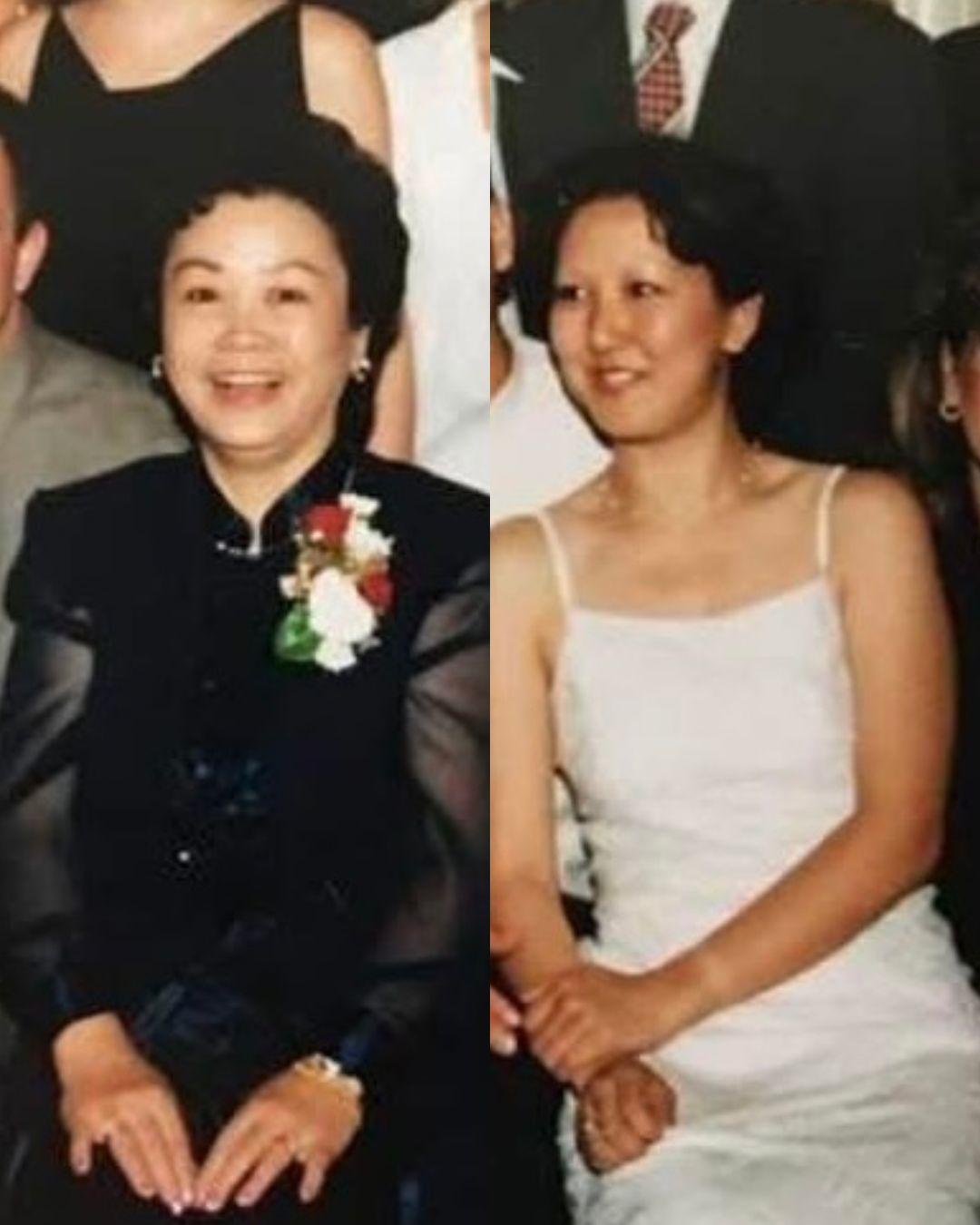
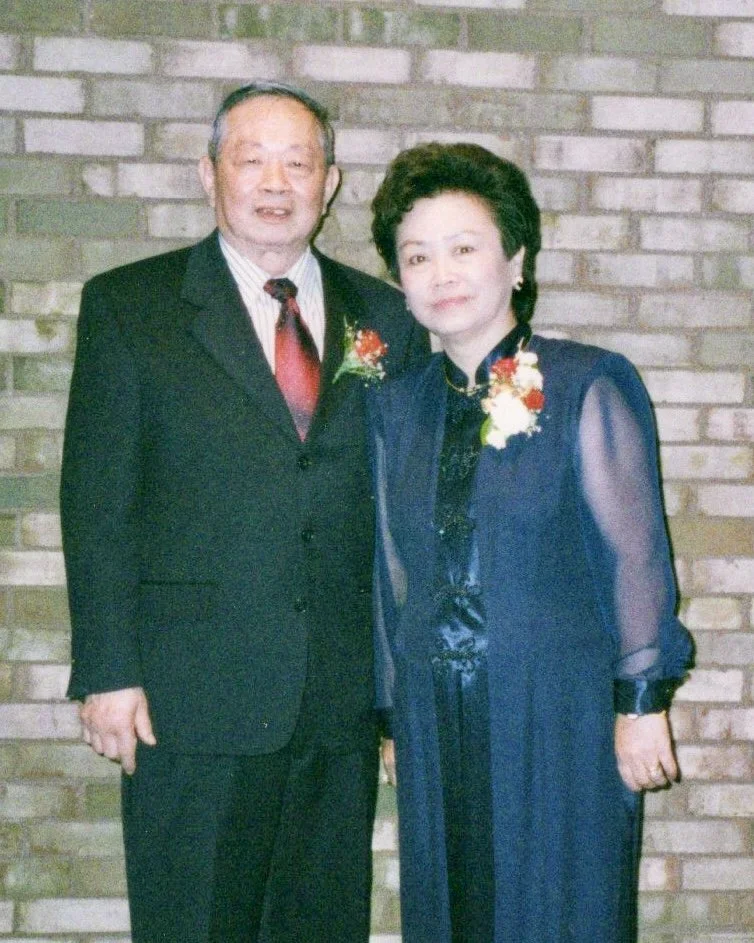
To many of the Leong’s staff, Rebecca was like a pseudo (Chinese) mom, to the point of feeling like one of her own kids in what I would learn later as an Asian parent stereotype where you never feel like you’re quite good enough, and so I was always trying to appease her and do my best. Of course, Rebecca was operating a business and had to run a tight ship with all of us “young people” as she’d call us, so I knew any temporary annoyance with me came from a place of her truly caring about her restaurant and staff.
Rebecca treated me more like family, many times treating me to meals and dimsum outside of work like she would do for other employees. She also invited me to her Florida home, providing an amazing spring break on year when I was 17, one I otherwise would not have been able to experience due to a strict mother. This trip included my first daring act of what would become many, boat parasailing, feeding my inner curiosity and freedom that I so desired.
I continued working at Leong’s while I attended community college first to save money for a four-year institution. The plan was to receive an Associate’s in Liberal Arts, take all the transfer courses, and acquire an above-4.0 GPA with my sights on community college transfer scholarships, something a lot of high school students don’t know exists. Through community colleges, you can receive partial and full-ride scholarships to four-year institutions—this is how I received TWO full-ride scholarships to: Wayne State University, known for medicine, a major I was considering, and Lawrence Tech University, famous for architecture, another major I was interested in.
Well, in whatever weird cosmo of decision-making process, I didn’t accept either of the full-ride scholarships, and instead opted for an overly priced private art and design college at Detroit’s CCS, majoring in a major and school I had never heard of up until my chance whim of driving to Detroit with my portfolio in hand to see if I could get in. Today, I wouldn’t recommend this for everybody (giving up a scholarship in exchange for an expensive art/design college), but I am incredibly lucky to have a base in design where I’ve been able to branch out to multiple parallel creative industries. Ultimately, I’m the type with curiosity and interest in a number of fields, which has contributed to my ability to work in so many areas.
Unfortunately, none of my classes from my Associates transferred to CCS, which meant I had to start from scratch, requiring another 4 years of school in which I was solely financially responsible for this massive school loan. In the beginning, I needed a couple of federal loans cosigned in which I asked Rebecca to help me by cosigning one of them and she did. She actually cosigned a few of her employees’ college loans throughout her years of owning Leong’s. That’s who Rebecca is. She’s worked very hard throughout her whole life and helped others along the way.
Today, I have two degrees. I’ve paid off my school loans, and I’m doing things in life I never imagined both professionally and personally. Some of this is due to Rebecca and Wing, immigrants who trusted me enough to help when I asked. Tomorrow, on October 23, Wing passed away three years ago, in 2023, at 92 years old, leaving behind his widow of many decades, Rebecca, two kids, and grandkids. I can only imagine how a loss like this feels.
When I was young, people barely knew where Korea was, let alone its existence; an irony today given the fact that Korean culture is the most popular Asian globally, but back then in Michigan, people assumed everyone was Chinese, and it was easier to go along with it rather than explaining the difference. Quite frankly, I myself didn’t know the difference: that’s how little I was exposed to my own birth (Korean) culture. So my exposure to Asianness through Rebecca was really meaningful and, in hindsight, something I was so looking for throughout my childhood.
America is built off of hard-working immigrants like Rebecca and Wing. Growing up in a homogenized white suburbia, it was them who taught me, through example, the nuance of who America really is, which greatly differentiates from the ridiculous sole tropes that qualify as “American” like football, big trucks, guns, whiskey, apple pie, and Cowboys, neither of which originated in America.
Most Americans don’t even know their own history, like the fact that the great American mascot, the North American Cowboys in the Westerns splashed on our fathers’ generation’s television, is not American at all, and in fact, the original cowboy is Mexican or Spanish, known as Vqueros. Mexican vaqueros were trained by Spanish colonists in the late 1510s and are the actual first cowboys in the Americas, but most Americans wouldn’t know this because American Westerns only depicted the good white man taking care of the bad (brown) man. Or how about that American apple pie, which is not American at all and, of course, English (Dutch, German, Swedish) in origin, dating back to the 15th century.
What is American is immigrants and everything they brought over to what is now the United States. Like most immigrant stories in America, from Italian, Irish, Polish, and Europeans who were also all once hated and propagandized against in America before they became normalized as “white“, Chinese experienced this same racism and discrimination, including the creation of laws like the Chinese Exclusion Act of 1882 which prohibited Chinese laborers from entering the country and stripped away the rights of those already here. Many anti-immigrant propaganda tactics were employed back then against Chinese, including the New York Times running an article in the late 1800s which created the rumor that Chinese people ate rats.
In ‘The Search for General Tso’—a fun and easy documentary on the development of the most popular takeout in America and globally, Chinese food—it accounts for these times of Chinese immigration in America from the San Francisco, California Gold Rush in 1849 that brought thousands of Chinese, to societal fear due to anti-immigration propaganda which led to Americans even burning down Chinese-owned businesses and homes, blaming them for their economic problems instead of the powerful: politicians and the free market.
This documentary is really about innovation, adaptation, and the quest for survival from bigotry and xenophobic laws, hence how Chinese food became an American and global staple. The sudden national acceptance partially hinged on President Richard Nixon's groundbreaking trip to China in 1972, known as ‘Chopstick Diplomacy,’ a visit that reshaped international relations and changed American perceptions of Chinese cuisine and culture. When Nixon ate Chinese food on public TV, it helped break down some of the barriers and fear causing Americans to really flock to Chinese food.
Chinese people didn’t flea despite America’s racism, they fed America instead making them a permanent fixture in American history. Rebecca and Wing are part of this American history.
Today, the last two Leong’s left have been sold: the original one I visited when I first arrived in America on 23 Mile, and the one I worked at on 21 Mile Gratiot, which was sold while I was still working there, and in my opinion, hasn’t been as good under the new ownership, making the 23 Mile location the closest to the original childhood Leong’s food I so affectionately remember.
I really loved my time at Leong’s. After all these years, it was wonderful reuniting with Rebecca, and some of the restaurant staff I knew in my younger years, as well as sharing a signed copy of my debut picture book and a piece of Yumi and Monster art with her.
When I was working for Rebecca, I was going through the mysterious condition that I now know as muscular dystrophy. I’ve seen her a couple of times since moving to California, but I’m so much more progressed today, and she herself is now experiencing physical struggles.
People often wait to say nice things after they’re gone, so Rebecca, I want to say thank you for everything, including all the delicious food and the love you offered in your own way. I hope to see you in California soon for Chinese duck and lobster, my treat. Love you.
With that, who’s ordering Chinese tonight? #KamsWheelsTravel
Follow me on instagram @ https://www.instagram.com/kamredlawsk