What is grief and sadness but an expression of love lost.
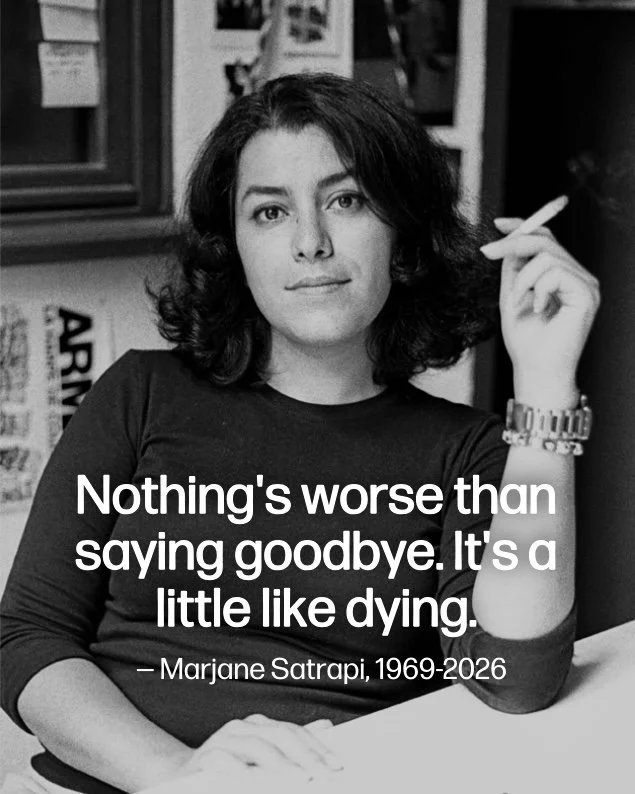
Weeks ago, a friend sent an article headlining that Marjane Satrapi (1969-2026), the Iranian-French author-illustrator, artist, director, public intellectual, and filmmaker behind the celebrated graphic novel and animated film, ‘Persepolis’, had died in Paris at the age of 56.
I’ve been thinking about this ever since.
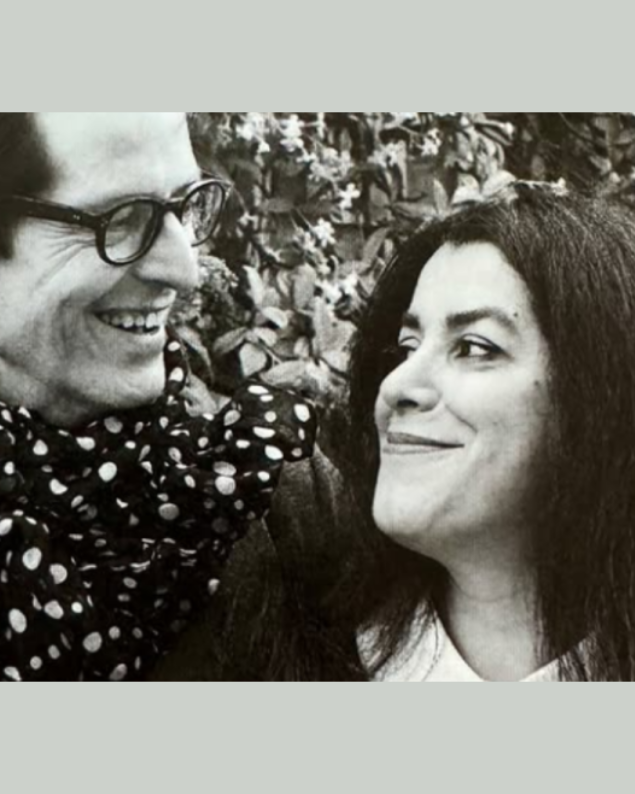
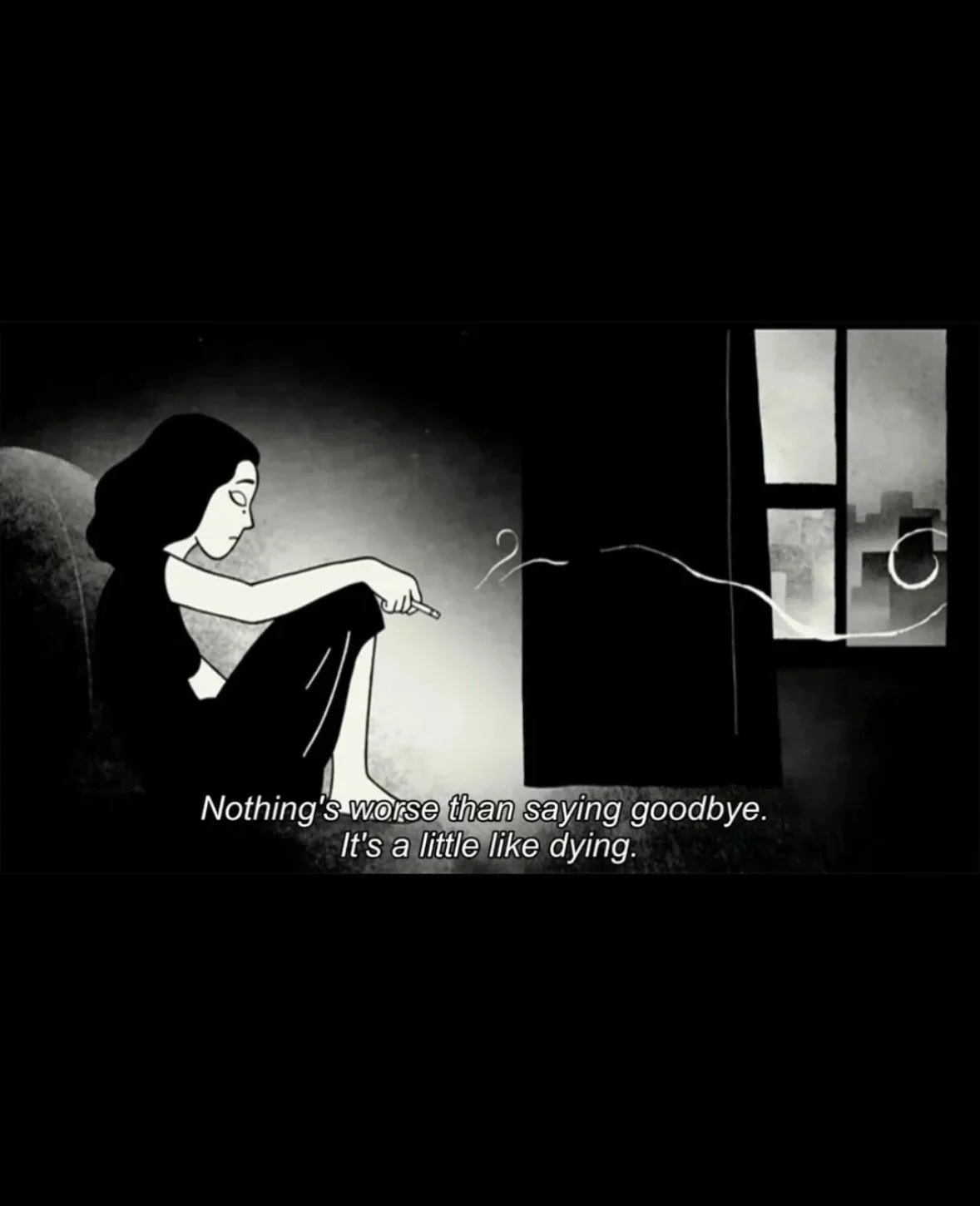
According to her family, Satrapi died of ‘sadness’ about a year after the death of her Swedish filmmaker husband, Mattias Ripa. They seemed to share a deep love, not just in the heart, but in mutual respect and admiration for each other’s creative craft.
Her death was shocking, but not at the same time.
In March, I came across Marjane’s April 2025 Instagram post sharing her beloved husband’s death with the simple words, “For I have lost the love of my life,” across nine tiles, and my immediate thoughts were, “I hope she makes it,” with a sense that this shattering loss was not going to end well.
Since I was a child, I’ve had feelings or visions that almost always come true. I don’t believe it’s “psychic ability”; I’m not much of a believer in psychics. I think it’s more emotional intuition and subconscious observation. Our subconscious sees everything if only we allow it the access to filter intuition.
Whatever it is, it’s been a weird experience throughout my life where I’m able to “predict” things like sensing oncoming separations, a new baby, engagements, struggle, or a death months in advance. Every time I tell Jason that I think such and such is going to happen, it usually does. Once again, I think it’s just deep, emotionally connected subconscious observation. I had this same feeling about Marjane in March, and then months later she died of ‘sadness’.
Another unusual thing since childhood is my obsession with biopics and stories of those who died young, “before their time”. As a kid, when these stories would hit, I would compulsively research them, and part of this reason is I myself have had a weird feeling my entire life that I was going to die early, perhaps by my 50s.
This lifelong feeling combined with receiving a diagnosis of a very progressive form of muscular dystrophy (GNEM) at 23, which for some has led to early deaths, including a Korean patient like myself who was the leader of the GNEM patient group in Korea, and passed some years ago in her 50s from complications that can arise with a progressive neuromuscular condition like ours. This progressive condition combined with the childhood nagging feeling that I would die early has contributed to the way I view and live life—as if I will die early. In a sense, my body has given me limited time with everything much like death does.
If I don’t die early, then at least I won’t have any regrets in the way that I’ve furiously lived my life.
Since Marjane died, I've been thinking quite a bit: how grief and sadness grapple with us, eating us up whole, for some into nonexistence, and how the natural process of life already creates such earthquakes inside of us, and yet humanity doubles down, creating manmade atrocities and unnecessary grief, and how sad and wasteful this all truly is.
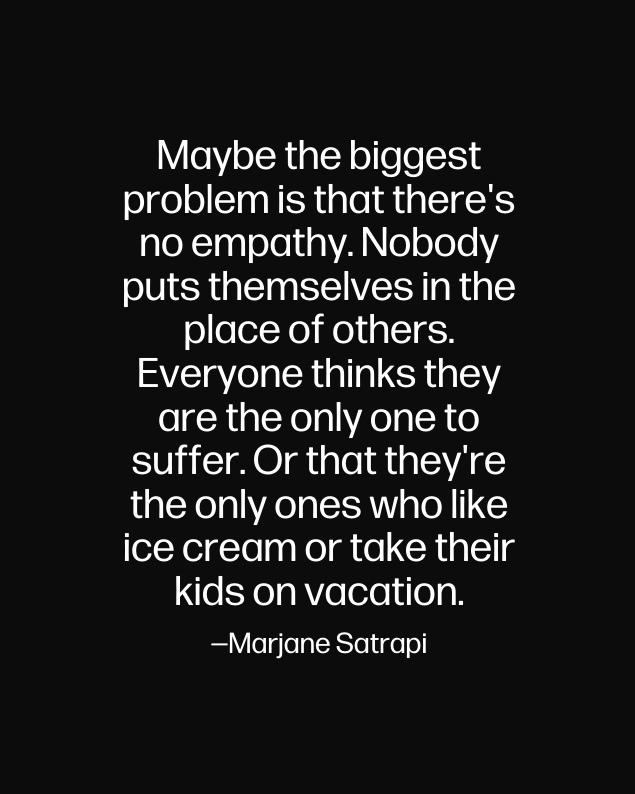
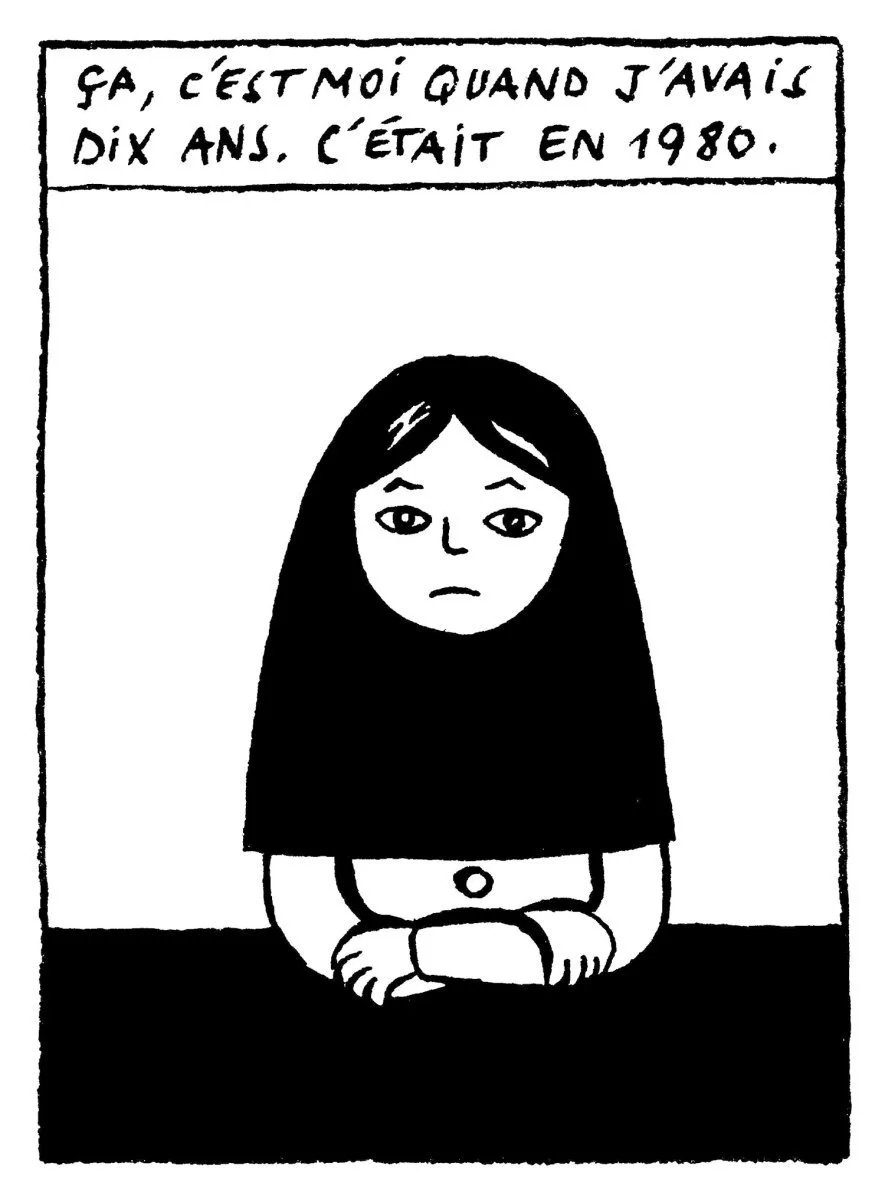
Marjane Satrapi, born in Rasht, raised in Tehran, Iran in 1969, came of age during the Iranian Revolution and the Iran-Iraq War. She rose to international acclaim with Persepolis, her autobiographical graphic novel about growing up during and after the Iranian Revolution, later adapted into an award-winning animated film. She also collaborated on many films with her filmmaker husband, Mattias.
I came to know Marjane when I first moved to Los Angeles, and a Persepolis English translation hit the cultural sphere, documenting the Iranian revolution with explored themes of freedom, exile, (political & cultural) history, fundamentalism, power, identity, and women's rights, positioning her as one of the most influential figures in contemporary graphic storytelling, or as she unashamedly called herself, a cartoonist, which goes to show her lack of elitism when it came to art.
Marjane was a true artist, creative in all realms, an unpretentious creator and storyteller.
“At a disconcerting time for Iran, for women, for young people, and for history, her death is mourned all over the world with an intimate sorrow that speaks of the bond she was able to build with her audiences despite the epic nature of her work.”
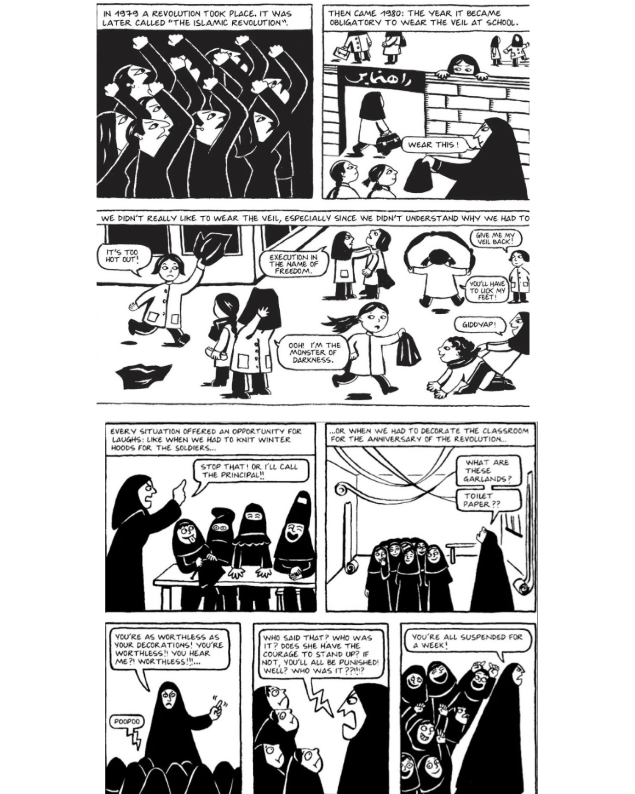
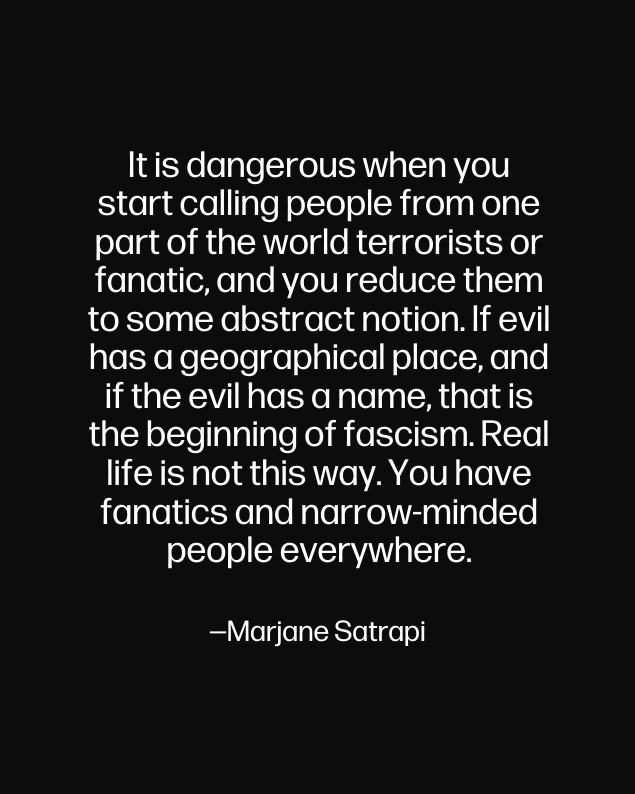
Intellectually, I knew of the Iranian revolution and its history, but Persepolis humanized this time in space that still exists in Iran today, demonstrating the importance of storytelling from all lived perspectives, an essential ingredient to personal growth rather than the simpleton villifying rhetoric of “dangerous DEI“.
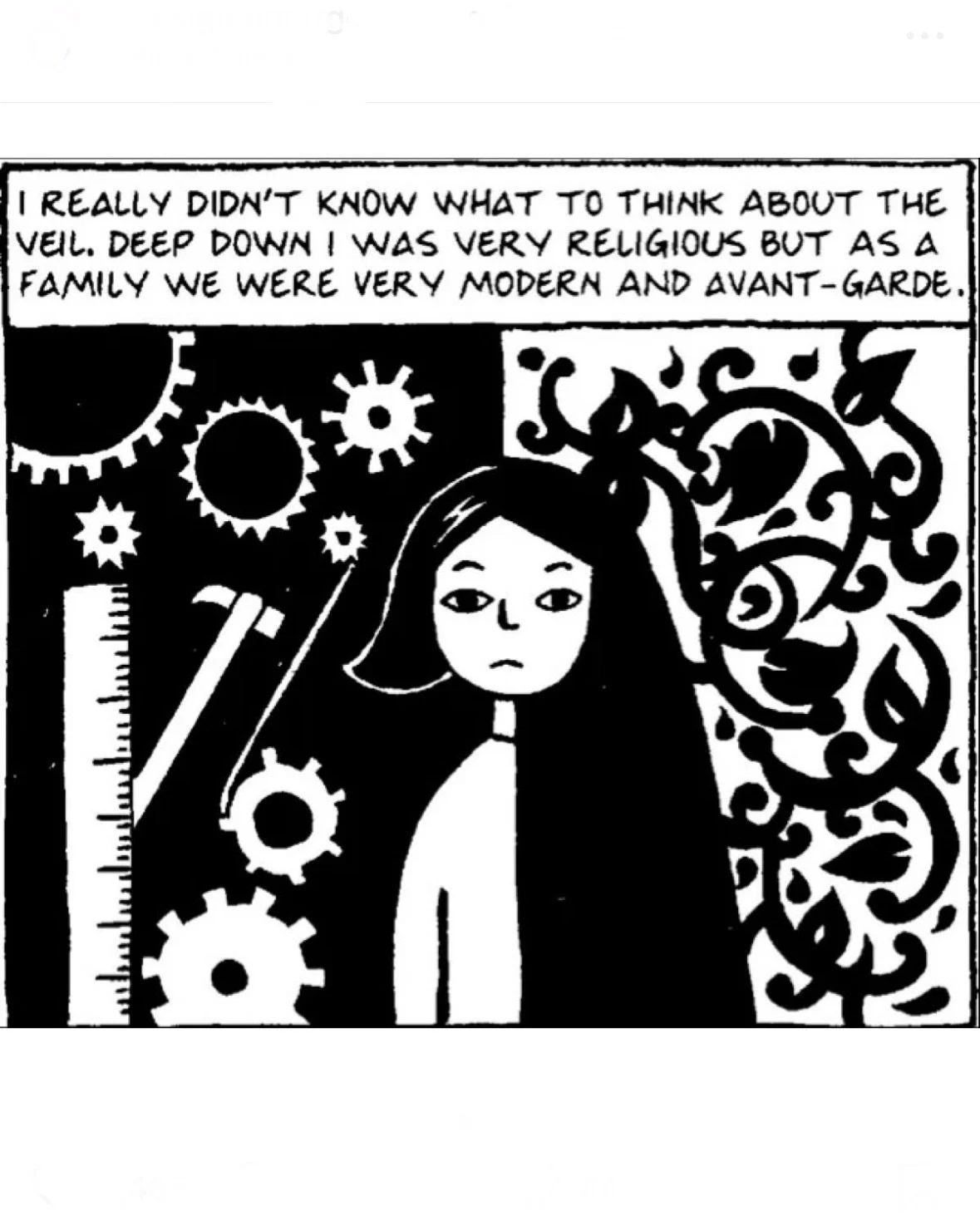
There is nothing dangerous about people’s stories, for it is in the act of telling lived truth where ignorance can lay down its sword and instead listen with their humanity. Marjane’s intimate and witty portrayal of the Iranian Revolution and growing up in general through a child’s eyes touched me emotionally, intellectually, culturally, and historically, with Persepolis subsequently inspiring me to start my own self-taught illustrative journey which initially mimicked Marjane’s black-and-white, a long-lived favorite style of mine.
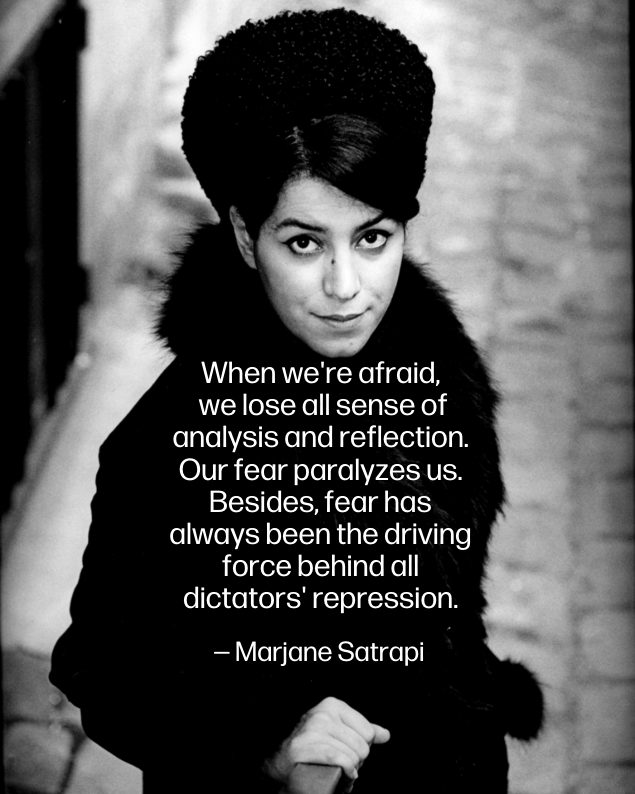
Marjane was an example of soft power, a story of an artist who uses their words and art instead of violence and hatred. She brought millions of readers into a deeply personal and important account of history that still exists today while exhibiting the pure danger and cautionary tale of nationalism, and even worse religious nationalism; a form of control, a radicalized trap any religion or group can fall into. History tells us this.
The religious fascist oppression Marjane lived under in Iran could’ve led her down a dark singularly hateful tunnel, instead she chose to use her pain and sorrow to build understanding and nuance, something society is ill-equipped with in modern times. Marjane didn’t sour and portray all groups as being one thing, but rather saw the nuance that can make all the difference between understanding and hatred which is always rooted in fear.
If we can find our humanity amongst all the inhumanity, then perhaps we have hope.
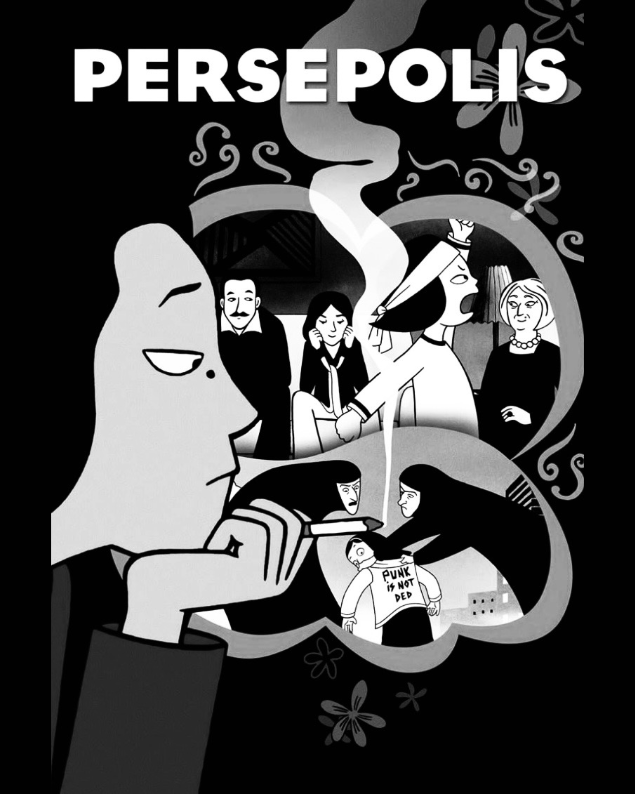
Marjane wasn’t just talented; it was her perspective and life experience, and how she chose to use it, that has earned her a space in history; an artist who used their words instead of hatred to change minds and build nuanced understanding. She was able to apply her experience to a broader world of view, like how power works, humanity, and the utter fragility of repeating history through fear and control.
Satrapi remained an outspoken advocate for freedom of expression, women's rights, and a nuanced understanding of Iran and its people. In recent years, she returned directly to Iranian politics through the collaborative volume Woman, Life, Freedom, responding to the protests that followed the death of Mahsa Amini.
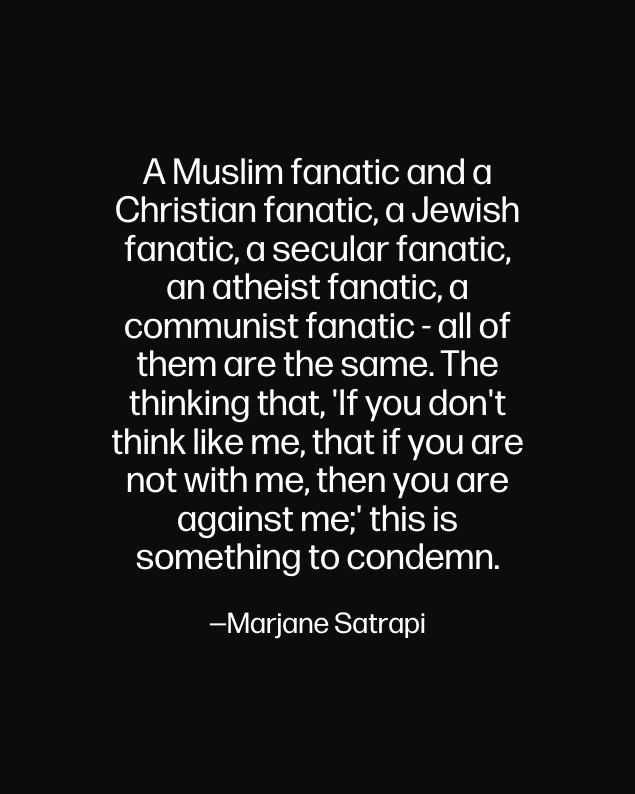
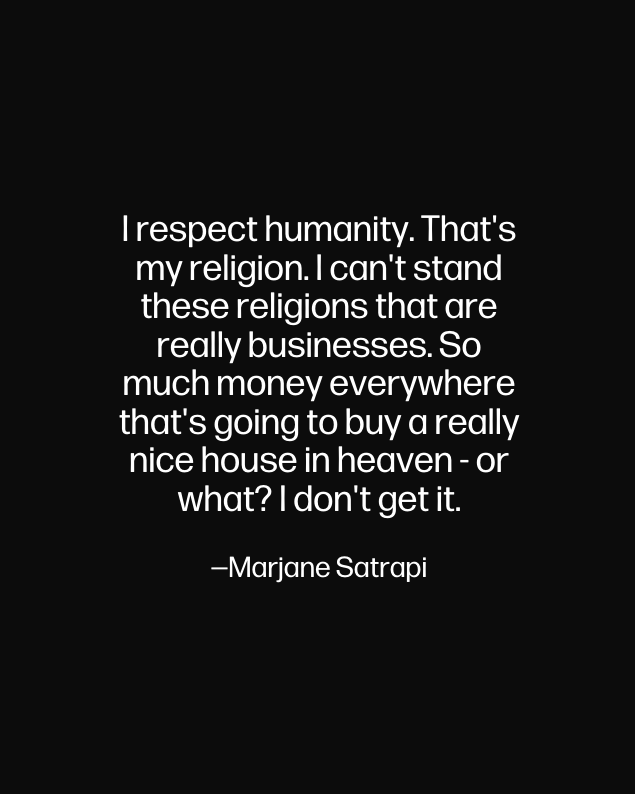
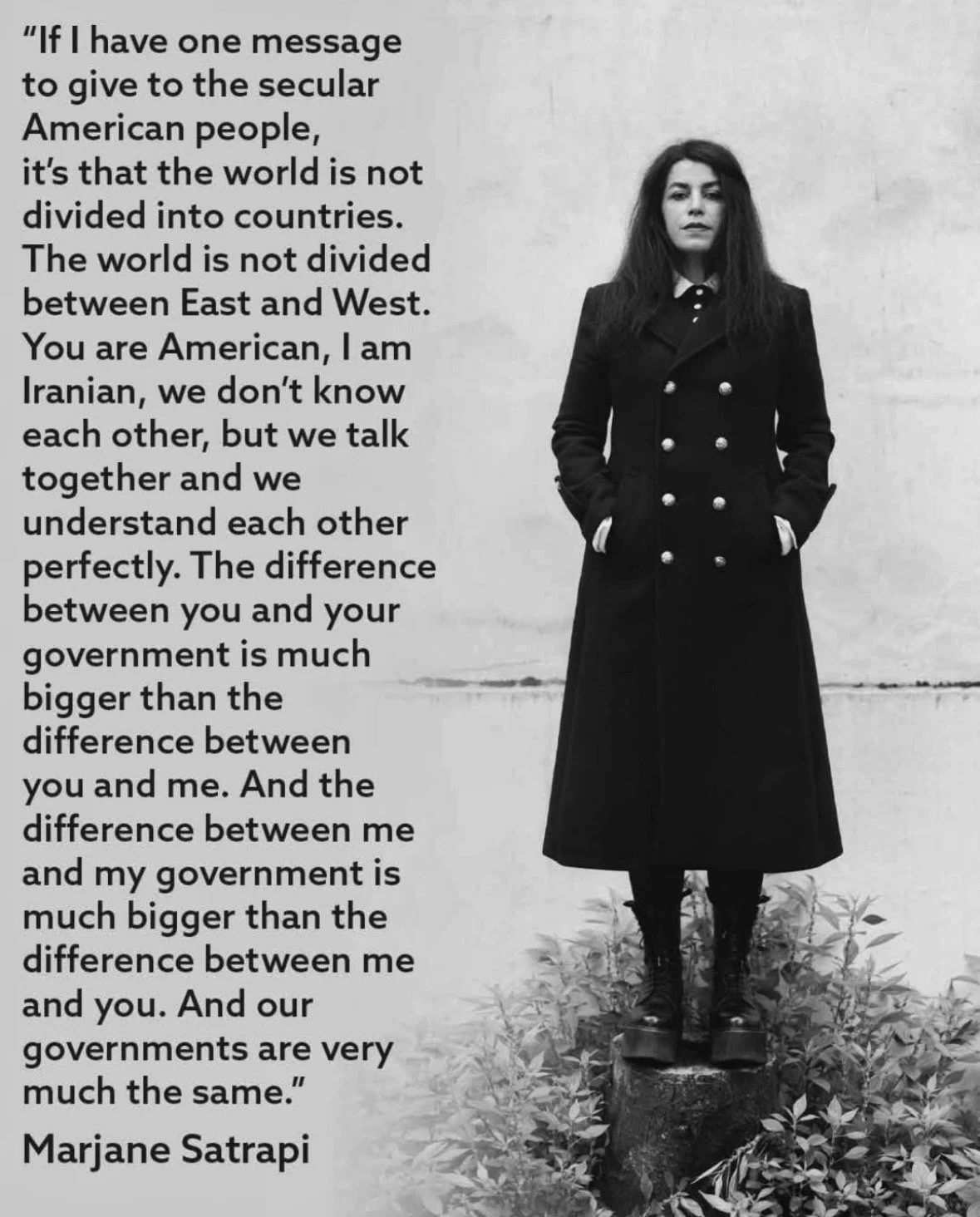
What I appreciated about Marjane is not just her educated empathy for her own people, but for all people, using her experience to apply understanding and humanity onto all identities. Sometimes living too deep inside your own identity unintentionally segregates you from other lived experiences. Despite her own experience of an oppressive theocratic government, her humanity and her understanding that no group fits under one category, with every one exhibiting the potential of extremism, whether in religion, nationalism, or secular, is indeed the more mature, educated, and evolved truth.
Often, I think of those who die of sadness because loneliness and sorrow have been such a part of me since the day I was born. So I really feel it. I see it. In others. A part of relieving grief’s pressure valve is sharing the tales in a voice where others feel heard, and that's what Marjane did, so it is sad to know that she herself died of uncontrollable grief. Rest in love, Marjane and anybody whose despair is drowning them.